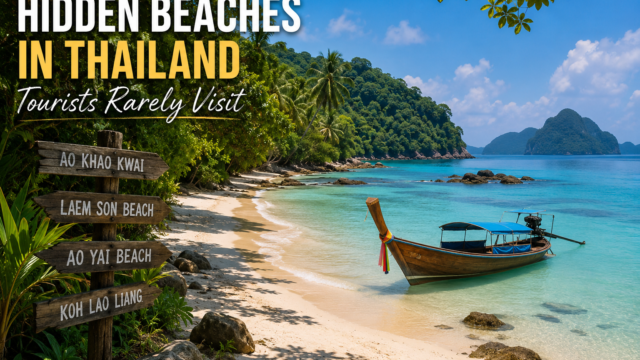
Thailand is famous for its tropical islands, lively beach towns, and crystal-clear waters. While destinations like Thailand, Phuket, and Pattaya attract millions of visitors every year, the country is also home to many hidden beaches that remain peaceful and untouched. These secret coastal escapes offer travelers a chance to experience Thailand’s natural beauty away from crowded tourist hotspots. From quiet fishing villages to isolated islands with turquoise waters, these beaches provide a more authentic and relaxing atmosphere.
Ao Khao Kwai – The Buffalo Bay Escape
Located on the peaceful island of Koh Phayam, Ao Khao Kwai, also known as Buffalo Bay, is one of Thailand’s best-kept secrets. Unlike the busy southern islands filled with large resorts and nightlife, Koh Phayam remains calm and simple. The beach is surrounded by coconut trees, wooden bungalows, and small local cafes that create a laid-back island vibe.
The soft golden sand and shallow waters make Buffalo Bay ideal for long walks, kayaking, and watching sunsets. During low tide, visitors can explore unique rock formations and small marine life along the shore. Since there are no large crowds, the beach feels peaceful throughout the year. Travelers who enjoy slow travel and quiet scenery often fall in love with this hidden destination.
Laem Son Beach – A Quiet Paradise in Ranong
Another hidden gem in southern Thailand is Laem Son National Park. Inside the national park lies Laem Son Beach, a long and peaceful stretch of coastline surrounded by pine trees and natural beauty. Unlike the famous beaches of Phuket or Krabi, this area remains mostly untouched by mass tourism.
The beach is perfect for travelers who want privacy and nature. Gentle waves, soft sand, and clean air create a relaxing environment ideal for camping or picnics. Many visitors also use the area as a starting point for island hopping around nearby smaller islands. Wildlife lovers may spot tropical birds and colorful marine species in the surrounding waters.
Because tourism is limited, visitors can enjoy authentic local experiences, including fresh seafood prepared by nearby fishing communities. The calm atmosphere makes Laem Son Beach an excellent choice for couples and solo travelers seeking tranquility.
Ao Yai Beach – Thailand’s Surfing Secret
While Thailand is not usually associated with surfing, Ao Yai Beach on Koh Phayam has become a hidden paradise for surfers. This long beach offers consistent waves during the rainy season and remains relatively unknown compared to international surfing destinations.
Ao Yai Beach combines adventure with peaceful surroundings. Bamboo huts, small restaurants, and quiet pathways replace large hotels and commercial developments. Travelers can spend their days surfing, swimming, or simply relaxing under the shade of palm trees. The sunsets here are particularly stunning, painting the sky with shades of orange and pink.
The local community maintains a strong eco-friendly culture, encouraging sustainable tourism and preserving the island’s natural charm. Visitors looking for an alternative beach experience away from Thailand’s crowded tourist centers will appreciate Ao Yai’s relaxed atmosphere.
Koh Lao Liang – A Hidden Island Beach
For travelers seeking complete isolation, Koh Lao Liang offers one of the most remote beach experiences in Thailand. This small island in the Andaman Sea features dramatic limestone cliffs rising above crystal-clear waters. The beaches here are incredibly quiet because access is limited and accommodations are minimal.
Koh Lao Liang is especially popular among nature enthusiasts, snorkelers, and rock climbers. The underwater world surrounding the island is rich with coral reefs and tropical fish, making it ideal for snorkeling and diving. Since there are few visitors, the marine environment remains healthy and vibrant.
The island’s simplicity is part of its appeal. Instead of luxury resorts, visitors stay in eco-friendly tents close to the beach. Nights are peaceful, with only the sound of waves and the sight of stars filling the sky. It is a perfect escape for travelers who truly want to disconnect from busy modern life.
Why Hidden Beaches Offer a Better Experience
Many travelers are now choosing hidden beaches over famous tourist hotspots because they provide a more authentic and relaxing experience. Quiet beaches allow visitors to connect with nature, enjoy local culture, and avoid overcrowding. Hidden destinations also often support small local businesses rather than large international resorts, helping local communities benefit directly from tourism.
Exploring lesser-known beaches in Thailand can also lead to unexpected adventures. Travelers may discover untouched coral reefs, hidden caves, local seafood markets, and peaceful villages that are absent from mainstream travel guides. These places showcase a slower and more traditional side of Thailand that many tourists never experience.
Additionally, hidden beaches are ideal for photography, wellness retreats, meditation, and eco-tourism. Their calm environments create memorable travel experiences that feel more personal and meaningful.
Conclusion
Thailand’s hidden beaches reveal a completely different side of the country beyond crowded resorts and busy nightlife. Places like Koh Phayam, Laem Son Beach, and Koh Lao Liang offer peaceful landscapes, authentic local culture, and untouched natural beauty. These destinations are perfect for travelers who want relaxation, adventure, and a deeper connection with nature.
As tourism continues to grow, protecting these hidden gems becomes increasingly important. Travelers who visit responsibly can help preserve Thailand’s quiet beaches for future generations while enjoying some of the most beautiful and peaceful coastal scenery in Southeast Asia.