The New Internet Era: How AI Is Changing the Way Humans Find Information

Introduction: From Searching the Web to Asking the Web

For more than two decades, the internet has been built around one simple action: searching. People opened a browser, typed keywords into a search engine, scanned through pages of results, clicked links, and collected information themselves. Search engines became the gateway to the digital world, helping billions of people discover websites, news, products, research papers, and entertainment.

However, the internet is entering a new phase. Artificial intelligence is changing not only how we search, but also how we interact with information itself. Instead of receiving a list of links, users are increasingly receiving direct answers, summaries, recommendations, and personalized explanations.

The future of online discovery may no longer be about finding the right webpage. It may be about having an intelligent system understand the question, analyze information from multiple sources, and provide the most useful response instantly.

This shift represents the beginning of a new internet era — an era powered by AI search, conversational interfaces, and intelligent digital assistants.


1. The Evolution of Internet Search

From Keywords to Understanding Intent

Traditional search engines were designed around keywords. If someone searched for “best smartphone under $500,” the search engine would identify pages containing those words and rank them based on relevance, popularity, and authority.

Although modern search engines became extremely advanced, the basic model remained similar: query → results → human evaluation.

AI is changing this process by focusing on user intent rather than only matching words.

For example, instead of searching:

“What are the symptoms of vitamin D deficiency?”

A user can ask:

“I feel tired every day despite sleeping enough. Could vitamin D deficiency be one reason?”

AI systems can understand context, interpret the problem, and provide a structured explanation rather than simply showing a collection of websites.

This represents a major transformation:

Old Internet:

  • User searches
  • Search engine provides links
  • User reads and compares information

AI Internet:

  • User asks questions
  • AI understands intent
  • AI creates a personalized answer

The internet is moving from a library model toward a conversation model.


2. The Rise of AI Search Engines

Image
Image
Image
Image
Image

AI-powered search engines are becoming the next generation of information discovery. Instead of displaying only ranked pages, they combine search technology with large language models capable of reasoning, summarizing, and generating responses.

Companies developing AI search experiences are attempting to create systems that act more like research assistants than traditional search tools.

These AI search platforms can:

  • Understand complex questions
  • Combine information from multiple sources
  • Summarize long documents
  • Explain complicated topics simply
  • Compare products and services
  • Help users make decisions

For example, someone planning a vacation might traditionally search dozens of websites for flights, hotels, weather information, and attractions.

An AI search assistant could potentially analyze these factors and provide:

  • Suggested destinations
  • Travel schedules
  • Budget estimates
  • Recommended activities
  • Personalized advice

The search experience becomes less about browsing and more about collaboration.


3. Answer-Based Browsing: The End of Endless Clicking?

One of the biggest changes AI brings to the internet is answer-based browsing.

For years, websites competed to attract visitors through search rankings. Users clicked multiple links, opened different tabs, and spent time filtering information.

AI introduces a new possibility: receiving a complete answer immediately.

Imagine asking:

“Explain climate change in simple terms for a school student.”

Instead of opening ten educational websites, an AI assistant can create a customized explanation based on the user’s needs.

This creates several advantages:

Faster Information Access

People can save time by getting summaries instead of manually researching dozens of sources.

Personalized Learning

AI can adjust explanations based on someone’s knowledge level.

A beginner may receive a simple explanation, while an expert may receive technical details and research references.

Better Decision Making

AI can compare information and highlight important differences.

For example:

  • Comparing laptops
  • Choosing financial products
  • Understanding medical research
  • Planning education paths

The internet becomes more interactive and intelligent.


4. How AI Is Transforming Online Discovery

Shopping Becomes Conversational

E-commerce discovery is one area where AI could create major changes.

Traditional online shopping requires users to:

  • Search products
  • Compare reviews
  • Check specifications
  • Read customer feedback

AI shopping assistants can simplify this process.

A user might ask:

“I need a lightweight laptop for programming and travel under $1,000.”

An AI system can analyze requirements and suggest suitable options based on performance, price, and user preferences.

Shopping becomes less about browsing thousands of products and more about having a personal digital advisor.


News Consumption Becomes Personalized

The way people consume news is also changing.

Traditional news websites present the same articles to millions of readers. AI systems can create personalized news experiences based on:

  • User interests
  • Reading habits
  • Preferred explanation style
  • Knowledge level

Instead of simply reading headlines, users may receive AI-generated summaries, background explanations, and different perspectives.

However, this also creates challenges around misinformation, bias, and the importance of verifying sources.


Education Moves Toward AI Learning Companions

Education may experience one of the biggest transformations.

Students traditionally depend on textbooks, teachers, and online resources. AI can provide personalized tutoring available anytime.

An AI learning assistant can:

  • Explain difficult concepts
  • Generate practice questions
  • Review writing
  • Provide feedback
  • Adjust lessons based on progress

Every learner could potentially have access to a personalized digital tutor.


5. The Changing Role of Websites and Content Creators

The rise of AI search creates important questions for the future of websites.

For years, businesses and creators focused on search engine optimization (SEO) to appear higher in search results.

The AI era introduces a new challenge:

How can content become valuable enough for AI systems to recognize and recommend?

Future content strategies may focus more on:

  • Original research
  • Expert insights
  • Unique experiences
  • Accurate information
  • Strong credibility

Simply creating content filled with keywords may no longer be enough.

The internet may reward creators who provide genuine value rather than content designed only for rankings.


6. The Challenges of the AI Internet

While AI-powered discovery offers enormous benefits, it also introduces risks.

Information Accuracy

AI systems can sometimes produce incorrect or incomplete answers. Users may need to verify important information, especially in areas such as health, law, and finance.

Privacy Concerns

AI assistants that understand user preferences may collect large amounts of personal information.

Questions about data ownership and privacy will become increasingly important.

Reduced Website Traffic

If users receive answers directly from AI, fewer people may visit original websites. This could impact publishers, bloggers, and online businesses.

Algorithmic Bias

AI systems learn from existing information, which means they may reflect biases present in their training data.

Building transparent and responsible AI systems will be essential.


7. The Future: A More Intelligent Digital World

The next generation of the internet may not be defined by websites, apps, or search boxes. Instead, it may be defined by intelligent interfaces that understand human needs.

Future AI systems could become:

  • Personal research assistants
  • Digital teachers
  • Shopping advisors
  • Business analysts
  • Creative partners
  • Everyday problem solvers

The internet could evolve from a place where humans search for information into a world where information actively comes to humans.

Instead of asking:

“Where can I find this information?”

People may simply ask:

“Help me understand this.”

AI will become the bridge between human curiosity and the massive amount of knowledge available online.


Conclusion: The Beginning of a New Information Age

The internet is undergoing one of its biggest transformations since the rise of search engines and smartphones. AI is changing the way humans discover, understand, and use information.

AI search engines, conversational assistants, and answer-based browsing are creating a more personalized and efficient digital experience. The future internet will not simply connect people to information — it will help people make sense of that information.

However, this new era will require balance. Accuracy, privacy, transparency, and human judgment will remain essential.

The next internet revolution is not about finding more information. It is about creating a smarter relationship between humans, technology, and knowledge itself.

AI in Gaming: Smarter NPCs and Dynamic Storytelling

AI in gaming enables smarter NPCs, adaptive storytelling, and dynamic worlds. Games now respond to player choices, creating unique experiences with evolving narratives, realistic behavior, and endless replayability.

Gaming has always been a space where technology and creativity evolve together. From pixelated arcade characters to hyper-realistic open worlds, every leap in computing power has reshaped how games are played and experienced. Now, artificial intelligence (AI) is driving the next major transformation—making non-player characters (NPCs) smarter, worlds more reactive, and stories more dynamic than ever before.

In this blog, we’ll explore how AI is reshaping gaming through intelligent NPC behavior, adaptive storytelling, procedural content generation, and what this means for the future of interactive entertainment.


The Evolution of NPCs: From Scripted to Intelligent

https://images.openai.com/static-rsc-4/tMhm2haKCozV2p4EQ9r8IiSlN0oqDfws52jUh88eU8_q-7DYoVulpatW4JGgsN7clWTLN_hntOJLEmtu30mH6G5ryqd5ADvIqAIvwPLXw0N6cWzf_hZAJENuB6UUKY8mrqxyQPzGMz0jNXPUChIJo20KVXxh1wLXibu-jEj43YI4eUurr1IAMIq2Ib78Udt-?purpose=fullsize
https://images.openai.com/static-rsc-4/lAFIRmV0KBG4Vj-SfXrbV9B4v7FSatkh7gZkQoUCiOz0q_9c8myMuWpMRQwT4C9EX2U6hC0yFDfcl25pHxuaXIEKxhFgzfRjzF5HVRougSJkJbl76lAAi_-w3JBTdTzyUHBMlBUGUkHkMNAt2s5bqD-tM82mY9uDMcEsV50Gu4ddcVUKbfUKOWsbOsBbAi45?purpose=fullsize
https://images.openai.com/static-rsc-4/WpjrZi5lu3w58-KOPfjb1YCwF2gWLe8r08v-hMfn23kaK4rR841lYCkm3QIteWj3S2Xnq9z11a-jaWnxqtlBqj4lxiunn7lANpVh1tk_dRW2KJXNJqpB13gp-q2uHEOP4ZHc2GOi6mXJifxGOnNH3qImRHhfOWoYmgrPgVJIp8riNz9FfDBxzq0Ta9u0sVun?purpose=fullsize

Non-player characters (NPCs) used to follow rigid scripts. In early games, NPCs had predictable patterns: they would repeat the same dialogue, follow fixed patrol routes, and respond only to specific player actions. While this worked for simple gameplay, it often broke immersion.

AI has changed that dramatically.

Modern NPCs use a combination of machine learning, behavior trees, and decision-making algorithms to react dynamically to players. Instead of repeating fixed lines, they can:

  • Adjust dialogue based on player reputation or past choices
  • React emotionally to events in the game world
  • Coordinate with other NPCs in real time
  • Adapt strategies in combat situations

For example, in modern open-world games, enemies don’t just attack blindly—they flank, retreat, call reinforcements, or even change tactics depending on how the player behaves.

This shift transforms NPCs from background props into living participants in the game world.


Smarter AI Systems Behind Game Worlds

https://images.openai.com/static-rsc-4/cjO3a72ayuKWjGhmjK9k9j9Un_TAbL9C5AQoR28BDQZPWh5G__zUDf0Yfkm4BUom_rrqydAxFD-kRxQp4C8m0v_rzgGH49Q7QmhgK19Z2ubfiQVKQa8EIxM8OPk4UsbO_bjA9JNgUeXn530LzWxpSdjmH4_8NnIvsr0VFOD1K9dOdyAoghcG--tt5Eo04tcg?purpose=fullsize
https://images.openai.com/static-rsc-4/d7rPh-Y9RQebRP8QC5KEPiJ-ZH6SMLP7fvqAoHmJz_qQ--T3xjAOUgq5SWO3gEPsqQ0qSK9L74Fip9zBg6B81TSrtQFLIR5sKRujWozJSwCTTgEZ4FhjDJXLWCZ5Emo4XHgIExlKyQ3nHtVKu26mEIfS9LYlkMafA58yy8odcGKiblpcM-m-9OLnI8BCKcoz?purpose=fullsize
https://images.openai.com/static-rsc-4/4wmtsQ7zEKn4AYDjPfgL5YVsJZNzNwhJNFAyZkb3Jz3GEASXSJQSI_88hcetxfOvAo0dIgOX_bC_3-Og5frKI82UUGlJH8ovWM_hZ7mDD-eOnc-_cNImSslBHOssgvcbrsSUmmfan5Z2fspizUF7MNV05xml8TCGkiV0PRJu85PyWoR_LmVivZvN6x9KPgwI?purpose=fullsize

Behind the scenes, gaming AI is powered by several advanced techniques:

1. Behavior Trees and Decision Systems

Behavior trees allow NPCs to make decisions based on conditions. Instead of a single scripted response, NPCs evaluate multiple possibilities before acting.

Example:

  • If health is low → retreat
  • If player is weak → attack aggressively
  • If allies are nearby → coordinate attack

2. Pathfinding Algorithms

Algorithms like A* (A-star) help NPCs navigate complex environments efficiently. This is why enemies in modern games can move naturally through cities, forests, or dungeons without getting stuck.

3. Reinforcement Learning

Some modern games experiment with reinforcement learning, where AI agents learn from repeated play sessions. Over time, these NPCs improve their strategies by “learning” what works against players.

4. Procedural Generation

AI is also used to generate worlds, maps, quests, and even items. Instead of manually designing every detail, developers can rely on algorithms to create vast, varied environments.

Together, these systems create game worlds that feel alive and unpredictable.


Dynamic Storytelling: Games That Adapt to You

https://images.openai.com/static-rsc-4/aV0Vn2U-KCD8rQMZxmd6FR-MP3yty071W5goP9tnvecQ7SYbFUu4h6CPY8tA5msHQrBPNCkyW_XtiAmYXvPxo14B7QH7jCrJ4j8TsRTmT5YCQWUSnGWWbrHrOLCPJzksil3iv1_nvoxey9t9yMr3jjN4yDk4uOKRLp0Ba8uarN3wIuTNkRNui5F9gTXTC0JF?purpose=fullsize
https://images.openai.com/static-rsc-4/4BdEFFt9z3-ErpAwt2Ml8iUUY8kXS9Dkevrl1ZrPJ2PvivCJ2-uIElzgDIo6n0kS-p1iCAsD2CHuchQ8ZyHudMPlof_ry_BYXfLaKGsHVdSrfNvLJnG8u8ssdMJyPAS4d1bTL1Swx27jLjyp7zaaXJi8qwdNNykVo84pa-BUW7C3uqKBhepBRqs957Q7327T?purpose=fullsize
https://images.openai.com/static-rsc-4/RarzCpFYss9iP_GDTs-7oJjr6RafmkaoAQkOuO0j_gUQ0C6NGE7du5zL8MjbC3mcxgOnHSJu89rD3wsKXKRksjOX1OFl2JoFfXPM_qXiC9SNOvZTcc2OcnZBEmqyzsNfhphUHaHt8c4vszbH3Bkyo5U2ClV-1cTs7At6pI_V1_1IDfYsrQcg80naP1v5R5e8?purpose=fullsize

One of the most exciting applications of AI in gaming is dynamic storytelling.

Traditionally, game narratives are linear or semi-linear. Players follow a fixed story path with limited branching choices. But AI enables something more powerful: stories that adapt in real time.

How It Works

AI-driven storytelling systems track player behavior such as:

  • Moral decisions
  • Combat style (aggressive vs stealth)
  • Dialogue choices
  • Exploration patterns

Based on this data, the game adjusts:

  • NPC relationships
  • Available missions
  • World events
  • Story outcomes

This creates a personalized narrative experience where no two players experience the exact same story.

Example in Practice

Imagine a fantasy RPG:

  • If you consistently spare enemies, NPC factions begin to trust you.
  • If you frequently steal, towns may lock you out or send guards after you.
  • If you help a kingdom, it may rise in power and alter the political map.

The result is a living narrative that evolves with your actions, making the player feel truly responsible for the world’s outcome.


AI-Powered NPC Conversations: Beyond Scripted Dialogue

https://images.openai.com/static-rsc-4/G040mp0E5A930sndn-fWBc2ilNrSt8IZVxw38ZIBeQyx2xebdFP7yMk4YxJNXYPdzZ5XKJErOM0pHw208ULWsXJYT-6mUfGS-aYGiAdvlXfoVIrWhBDegwIxfShQUQOypIYvTglldx4k-6QehBZQNUpraCRQLzPR-mcdwsyPllufGpQllJd_mYXw4_Xbf074?purpose=fullsize
https://images.openai.com/static-rsc-4/Zl7I6h77i13TgL6mtS-UYvXP9FOe1M_Yx-wR3OXeWzjyJiMArJGidDNRsPNYMQqYc_nfOuy6TR_pHx3fUQcsHVlsI0Aibro7H6NSc2BrMvCUIo_AfLWCCb67HWh9sDGL9UBxdHl7HrqJPieJn-A1boGE26dZGijxtscnAGsWmrU5ub3-34634DzNDDhvE-2D?purpose=fullsize
https://images.openai.com/static-rsc-4/ZoPEV2rd6T0BdmmTHfgduOv4Owkd24YhJHf8F4VDnoOR83fZQCYDmb_0Bc67lpCPqE7TQ4QLlzXBvYjOvshS91VoKUAFdUMO0Ky8hGkC5lC8KZnt02F88U8EPMznE_Nd9e_e8XbqGJtxuhsbyxGS0R7SWMvuSoQ8tUYVyX9VEX5WM0GoAPMLkq0nCpTdGpZR?purpose=fullsize

One of the biggest breakthroughs in gaming AI is natural language interaction.

Instead of selecting from pre-written dialogue options, players can now sometimes type or speak freely to NPCs. AI systems interpret the input and generate appropriate responses in real time.

This creates several advantages:

  • More immersive role-playing experiences
  • Less repetitive dialogue trees
  • Greater emotional depth in conversations
  • Emergent storytelling possibilities

For example, instead of choosing:

  • “Ask about the quest”
  • “Say goodbye”

You might type:

“Why should I trust you after what happened in the village?”

The NPC responds dynamically based on context, personality, and past interactions.

This kind of system blurs the line between scripted game dialogue and real conversation.


Adaptive Difficulty: Games That Learn From You

https://images.openai.com/static-rsc-4/hKImSoSUfW28agjp2tTJdIsxXq6zVHBdsSsTiQlIflc5OuDLGIpHSJ9TaHflkLhic4PNDUQNMahi92koKJ6KC6381bPSQ8T64ZXszDC6FOLMb8N8CgK3cORNp1IN3dSPI9ooUcgc-76QBCLkS002-rqb74Jr5Y2qhz6EykUY4TWm9EcG_xzU15KZRRj8ftv_?purpose=fullsize
https://images.openai.com/static-rsc-4/ZYlxuyMVZhSzNxKHiivnykNdhhNtLZoVAC4LNsjgm97hVxu3FUrngZoVfmWG1txpkher6HDBeehqecy4s77YEVn7pv94io-ksITf6raw_mayAjNWg3tC3iUXxxfGkWWwW6k5iV1SNpCQlfk6MNN8k1MPWQ8C1HHcGVLgdSQSKO8gRLzx7wMTwZHeZHN6CFBa?purpose=fullsize
https://images.openai.com/static-rsc-4/ymhcmzvZE2-1YyR_Gufq3tKklZCD6z0_94QoEMagWXgFYy4A2eDd41wNFmIFXbbwqkRcshC-KRu854ntIDIKfbJ-ejKFQvzFkSnSzQbPVtjmeppIcj_6Sh5hqxNtVZ-kTMPe31fjxUklU_fa3wdWs5yL_2gjAtFv4H1FViZ2QRxqT3lAD12cM76XmQ3sOLxD?purpose=fullsize

Another major AI innovation is adaptive difficulty systems.

Instead of fixed difficulty settings like Easy, Medium, or Hard, AI can continuously adjust the game based on how the player performs.

What AI Tracks:

  • Reaction time
  • Accuracy
  • Strategy effectiveness
  • Survival rate

What It Changes:

  • Enemy aggression
  • Resource availability
  • Puzzle complexity
  • Damage scaling

This ensures players stay in a “flow state”—not too easy, not too hard, but just challenging enough to stay engaged.

However, developers must balance this carefully. If players notice the game is “cheating” or adjusting too obviously, it can break immersion.


Procedural Content Generation: Infinite Game Worlds

https://images.openai.com/static-rsc-4/X4nA9MiC1c_7FjpJEKB6fCmR-4BTEIyx-A9zhicTJPL_pDB1s8HY_I33bT4Yyzj31_1k1c9NdFrlfDxo9xTF7CfVSrY0bfE-78VeGHHo4kCqMJxrLPZzw4NcN0JKywmPv7OKP6VMXXJi35cdFsoT_WlZ6XwASVI_IM8fmKIerZZFl_j6AVrTozUdbLJzYDMX?purpose=fullsize
https://images.openai.com/static-rsc-4/SLEp31ydmg0cdHTJXXKXVgl2UGACXfR7BNkFadhHbXUjUSmBzGWKjqyHwUINHvMhS9S2bcfDJFK8xjVqPAuDorA4nie9T5-Muzzkd_94F3KWf4K7LBV5bwaVUWaC20d3XINgYOw5Q04oO6p7o-_sQMw3H1zJ1aeENPsUK4potYjbe6s9pmeb0FfHLuyrG9Dj?purpose=fullsize
https://images.openai.com/static-rsc-4/KjHK5TQy21yBO67fiRvMhcLNRu14wnSEyz8pDrxFI1uiPcdrP1cNk5eIFtEyokT31XKyDfL0XTDoGQNh7-RGgSoyH0TMXj-YTQbrPcQC2ZiZ3lqcCItAcOjAmUNWz_3glDLT5JTZQV36EbbUDBiAlKA_XfwYED4Ns7h4T0BihszQfLKsjWqTciFCckplTBDD?purpose=fullsize

Procedural generation is one of AI’s most powerful contributions to gaming.

Instead of manually designing every map or level, developers can use algorithms to generate content automatically.

This includes:

  • Landscapes and terrain
  • Dungeons and caves
  • Entire planets or galaxies
  • Side quests and loot systems

Games like exploration or survival titles often rely heavily on this technology to create nearly infinite replayability.

Why It Matters

  • No two playthroughs are identical
  • Developers can build massive worlds with smaller teams
  • Players experience constant discovery

However, procedural generation must be carefully designed to avoid repetitive or meaningless content.

The best systems combine AI randomness with handcrafted rules to maintain quality and coherence.


The Future of AI in Gaming

https://images.openai.com/static-rsc-4/tuOhigy-hpo54soWKk9qvNYW6GXiVyd3VYhWTk_L6bqaHK-VW1hsbY3ZjLJ__qsrvdKhG9Q6cYE0XYc8cEBl1kfgNt4WUvTZzPYUy5fY75DneNmzfr3aUQPDXxBMnS_GSyK6ZTR9IDDlyk24J-CL5P6abZ413aBTmKAG6rI1UUQ3nxrSTuS8rA_P3mY4dj24?purpose=fullsize
https://images.openai.com/static-rsc-4/3ksexQwevkyswT-mIo7iXd8tFF4DFhrFCiCZQ076I_MnVkuIL93dS4K767sqllqComexyl9pHDTpQHm2uX-W86rYLCci_nl7UzypPNYOsiLcYQoK1LdXfyS7BntbJsMzh5cq29j-5LPwZek6UldFQRYmbmpOHMDb5wSL9MP65cEqKStXBI-o49ppCXWbAniF?purpose=fullsize
https://images.openai.com/static-rsc-4/AUk15AnwT234nTFR9Yg1jTYJtfKMDUQ9Ogaj1m3y-sFT7DFdA56oT3ReJzRlLYgizff1eigfWla7fktOIFeasq8SUC_sgkArfO_8wulxeCoOs5WEEgSJVZswPPv8w2ewgLg6yk74shk89BRcAKTiqVadxWeOQI6K6RrHaWhXN1GHyhbxOoXkTx3RtFJozJVl?purpose=fullsize

The future of AI in gaming is moving toward fully immersive, responsive worlds where every element reacts intelligently to the player.

Here are some trends we are likely to see:

1. Fully Autonomous NPC Societies

NPCs will have routines, jobs, relationships, and evolving goals—even without player interaction.

2. AI-Generated Story Campaigns

Games may generate entire story arcs on the fly, tailored uniquely to each player.

3. Emotion-Aware Gameplay

Future systems may detect player emotions through voice or behavior and adjust the game accordingly.

4. Hybrid Human-AI Game Design

Developers and AI will collaborate in real time to build evolving game worlds.


Challenges and Ethical Concerns

Despite its promise, AI in gaming also raises challenges:

  • Predictability vs chaos: Too much randomness can break game design
  • Fairness issues: Adaptive systems may feel inconsistent
  • Content control: AI-generated dialogue must remain appropriate
  • Performance costs: Advanced AI requires powerful hardware

Developers must strike a balance between innovation and control to ensure enjoyable gameplay.


Conclusion

AI is fundamentally reshaping the gaming industry. Smarter NPCs make worlds feel alive. Dynamic storytelling makes every choice meaningful. Procedural generation expands game universes beyond what human designers alone could build.

We are moving toward a future where games are no longer static experiences—but living systems that evolve with every player interaction.

In this new era, every playthrough tells a different story, and every decision truly matters.

How AI Is Used in Social Media Algorithms

Artificial Intelligence (AI) is the invisible engine behind almost everything you see on social media today. From what appears on your feed to the ads you’re shown, AI systems continuously analyze behavior, predict interests, and decide what content keeps you engaged the longest.


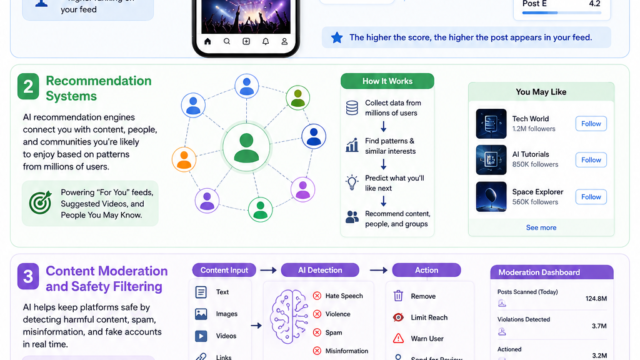
1. Personalized Feeds and Content Ranking

Every time you scroll through platforms like Instagram, Facebook, or X, AI is working in the background to rank posts. It studies what you like, comment on, share, and even how long you pause on a post.

https://images.openai.com/static-rsc-4/ZqXnISPF2w4wUvuzkVxi-BNlI1tp5njk2Ep5ESBKLStagJD52VN4SZ63f-UGmVU0o2wT6IQLUMw0IQVkHIR76TYLKXszyjDEValdLC6i5RsorHf86CZQp8rydmlZJUh7qNyO0Db5ZtpDDFWcla_VVX5QS91tc910y2iz0Ix4zsA3a8vfsSnsuJWVT2GM5Me0?purpose=fullsize
https://images.openai.com/static-rsc-4/x32kOe9HKxb363pIMbZ7xQAGhr1bs2aPvtQIqfjfXVJQmOjk4-nl0r8TsQcNliDh8crYdHVmuVY2zo2rhS929OU0LNlI4ECV0seBu3FapkOuxgEr22laKYJdQXVj1vMEepg3x7NLd3z3PLqri5mJKCPECVDevBMzmmVlsQ_weAqnyfSvgQpXTk-8dqTtbE0b?purpose=fullsize
https://images.openai.com/static-rsc-4/JM9z-g7OB2LR74zGzJvwnM9pdiL-0KIsgmUzKXtrdBar-M2vcj4rrMenFGblJ1qFcns7g-wsQHKSyPFcVfaszVaVa0Oq7t25cyIoUr8ah1LEAEZcXFPnZkDklubQZWebLG1x0xPjZR6yOL83NMkUxXtgpZ3JYFZpdB0C_bYNg0brJTOXVNSmjUG-VCmNohn4?purpose=fullsize

9

Machine learning models assign a “relevance score” to each post. Higher scores mean the post appears closer to the top of your feed. This is why two users rarely see the same timeline in the same order.


2. Recommendation Systems (What You Should Watch Next)

Recommendation engines power features like “Suggested Videos,” “People You May Know,” and “For You Pages.”

https://images.openai.com/static-rsc-4/1B-MwKneOumo1aOCYjwR8u3RF9okfs3nLm29ZV9AQ12nWae66k8BfCOomrBI6Dl9rzB4KSq_FdMeDOjwxeLv-HH242HkxqEw75k0qWeG9-pjWmejwlEIGkoRXvl554eVftv_wQVRAXRBQGhWlHy4wKnzgoh01t7zJtwraKiWbw0YWjP1VMN1W_aUzFHvlTmo?purpose=fullsize
https://images.openai.com/static-rsc-4/_Y3c2npEqIw_atQamDUKffbVD9J1duWvP9R5bF2QBu8E0ITUvMUnbP93vToQ7tzCSy5ySN4LX_UN24eDDMSpQil_O7HEou_iPaf7auXn32E2urmTeZZj0Bi3i9KZfh8RYtf12SObsxVzmYjMFrQlaLoHpDTvNWOK8lJ8KQvYHBbOqTZt4etGg8EGvrBY3Wtw?purpose=fullsize
https://images.openai.com/static-rsc-4/18Oca6__sR1zH6-o4Mvo29MwWsi4Ii8uAPcViMzR-XErzOUwGpT1RBitMTGEHrNv6Qg9W2ouddfOQmHhVx_FswssFDiWaM4wJwZY0YnX4euO9SR-pfLFbIUEUU2X8ortkCpI8r8HvlVCE9kKkFSH8eA6huXOgJB-T8a_GLD-Cva2LPxylO2zPu-VW7Ky8XD1?purpose=fullsize

8

These systems use collaborative filtering and deep learning to connect users with similar interests. For example, if many users who like tech videos also watch AI tutorials, the algorithm will recommend AI content to you even if you’ve never searched for it.


3. Content Moderation and Safety Filtering

AI also plays a major role in keeping social platforms safe by detecting harmful content, spam, misinformation, and fake accounts.

https://images.openai.com/static-rsc-4/HOgnphyAIhjLU__JuxiPZVn1zaU18RoKVc_s-nqo6fhG0a5x4iKeaapkZBy_-av-GjJUG3JpUDbUZlnwIgA5sizIlZ0-ARqoeKOt0KgFYXqYteteMoqPa7PCIAaYJN2vybqy3VS6Vk1zhYqzYMvgsm4HH5KSySxYIiN2BZXxIYorqM55uC30vV11OWqInbKl?purpose=fullsize
https://images.openai.com/static-rsc-4/aZg9CE_dA6lkge3iHv4fuvR3Qq37_6Swl242jp1P7ux9z_udVEfsGbmH_Y_6RU5UlxKlv8ELhvvlQ2uQzGSXrpUKPQ9g3dlGo5gVmhgWuvNkRLQoO7-JYSYvYwAmcROBCOGKN5DP1UbVkH2-Ca8qx1ZbzecUgUgNH7fal439AB-b4SnbLh-gi0SmtGPdkgZf?purpose=fullsize
https://images.openai.com/static-rsc-4/VSwMec-jqFbKhIvZtAnAxlvy7lfjwsKjOkxwoM8AsdNrfLRjwHlLszUShukYxGeDALETDbPpH-sR3iaKdF0H-FYb3V8TvqkJQWrwEgos_Gy1t7iTNp-bIEhnN5TGpKI_YQr4ehFxRV9_CBNQ1eCRyxtWvhlGBOkcxgx7-fku3wfZPB5I6H24cbFeqxbxoGRo?purpose=fullsize

7

Computer vision and natural language processing models scan text, images, and videos in real time. While not perfect, these systems help remove millions of violating posts every day before humans even see them.


4. Targeted Advertising and User Profiling

One of the most powerful uses of AI in social media is advertising. Platforms use AI to decide which ads you are most likely to click or buy from.

https://images.openai.com/static-rsc-4/LtbXU-NEmFpuKHp68Dxi-uTfX6kmzuIOfre2yc3t5IQipkrPLAkXWYHsxgyE4716e5-H-k_laq6zIkcPaAVAD3d9vQnNdQGR2EXPxBSPsUKhaeuedowlTauRJDpMuSi0pk6xy9kAR_lEy1qTQJ05C1Jsk0Q0B3fQWU22L5tCYL2DeQpy0gSvWVVWGEt7CVpg?purpose=fullsize
https://images.openai.com/static-rsc-4/S_ADokusYdYdBEFUtklHOYPjV4r2mYTwW8zOmFGgiBqEkYpeJc-TDX1rL9LaXEr3NkcIZ-6R9uDpAADQ7v9PfThbNfIdbIBstvTtVApFgW0CfQf8jJjYQ0yG4pbJA6yBiqFXdVBG0j_mspNnatbMYuf-4vKDI0pHY3p-OTomgiHLP2dqU-uiDtzSSUSAGEM2?purpose=fullsize
https://images.openai.com/static-rsc-4/7vUDHCOPOFk7RPyTmuhF3znAwf6akfl49VSQaB-3BhLjRfe1aszq7H0LQ35hf6KD7lxBBuWaMhQkrZXBZaXzKGkcF_5i9uBHR7GndNzxnv1LWkL0SdzosVd1QaVies3zPK5X3L3vvtNIbR4Qtu5IEUT4kuF0xG9q5LxU1FpWD1oCcFebU3cFnRA6ncwuNqNb?purpose=fullsize

6

AI builds detailed user profiles based on demographics, interests, and behavior patterns. This allows advertisers to reach highly specific audiences, improving conversion rates while making ads feel “personally relevant.”


Conclusion

AI is deeply embedded in social media, shaping what we see, how we interact, and even what we buy. While it improves personalization and safety, it also raises concerns about privacy, echo chambers, and over-personalization.