AI in Gaming: Smarter NPCs and Dynamic Storytelling

AI in gaming enables smarter NPCs, adaptive storytelling, and dynamic worlds. Games now respond to player choices, creating unique experiences with evolving narratives, realistic behavior, and endless replayability.

Gaming has always been a space where technology and creativity evolve together. From pixelated arcade characters to hyper-realistic open worlds, every leap in computing power has reshaped how games are played and experienced. Now, artificial intelligence (AI) is driving the next major transformation—making non-player characters (NPCs) smarter, worlds more reactive, and stories more dynamic than ever before.

In this blog, we’ll explore how AI is reshaping gaming through intelligent NPC behavior, adaptive storytelling, procedural content generation, and what this means for the future of interactive entertainment.


The Evolution of NPCs: From Scripted to Intelligent

https://images.openai.com/static-rsc-4/tMhm2haKCozV2p4EQ9r8IiSlN0oqDfws52jUh88eU8_q-7DYoVulpatW4JGgsN7clWTLN_hntOJLEmtu30mH6G5ryqd5ADvIqAIvwPLXw0N6cWzf_hZAJENuB6UUKY8mrqxyQPzGMz0jNXPUChIJo20KVXxh1wLXibu-jEj43YI4eUurr1IAMIq2Ib78Udt-?purpose=fullsize
https://images.openai.com/static-rsc-4/lAFIRmV0KBG4Vj-SfXrbV9B4v7FSatkh7gZkQoUCiOz0q_9c8myMuWpMRQwT4C9EX2U6hC0yFDfcl25pHxuaXIEKxhFgzfRjzF5HVRougSJkJbl76lAAi_-w3JBTdTzyUHBMlBUGUkHkMNAt2s5bqD-tM82mY9uDMcEsV50Gu4ddcVUKbfUKOWsbOsBbAi45?purpose=fullsize
https://images.openai.com/static-rsc-4/WpjrZi5lu3w58-KOPfjb1YCwF2gWLe8r08v-hMfn23kaK4rR841lYCkm3QIteWj3S2Xnq9z11a-jaWnxqtlBqj4lxiunn7lANpVh1tk_dRW2KJXNJqpB13gp-q2uHEOP4ZHc2GOi6mXJifxGOnNH3qImRHhfOWoYmgrPgVJIp8riNz9FfDBxzq0Ta9u0sVun?purpose=fullsize

Non-player characters (NPCs) used to follow rigid scripts. In early games, NPCs had predictable patterns: they would repeat the same dialogue, follow fixed patrol routes, and respond only to specific player actions. While this worked for simple gameplay, it often broke immersion.

AI has changed that dramatically.

Modern NPCs use a combination of machine learning, behavior trees, and decision-making algorithms to react dynamically to players. Instead of repeating fixed lines, they can:

  • Adjust dialogue based on player reputation or past choices
  • React emotionally to events in the game world
  • Coordinate with other NPCs in real time
  • Adapt strategies in combat situations

For example, in modern open-world games, enemies don’t just attack blindly—they flank, retreat, call reinforcements, or even change tactics depending on how the player behaves.

This shift transforms NPCs from background props into living participants in the game world.


Smarter AI Systems Behind Game Worlds

https://images.openai.com/static-rsc-4/cjO3a72ayuKWjGhmjK9k9j9Un_TAbL9C5AQoR28BDQZPWh5G__zUDf0Yfkm4BUom_rrqydAxFD-kRxQp4C8m0v_rzgGH49Q7QmhgK19Z2ubfiQVKQa8EIxM8OPk4UsbO_bjA9JNgUeXn530LzWxpSdjmH4_8NnIvsr0VFOD1K9dOdyAoghcG--tt5Eo04tcg?purpose=fullsize
https://images.openai.com/static-rsc-4/d7rPh-Y9RQebRP8QC5KEPiJ-ZH6SMLP7fvqAoHmJz_qQ--T3xjAOUgq5SWO3gEPsqQ0qSK9L74Fip9zBg6B81TSrtQFLIR5sKRujWozJSwCTTgEZ4FhjDJXLWCZ5Emo4XHgIExlKyQ3nHtVKu26mEIfS9LYlkMafA58yy8odcGKiblpcM-m-9OLnI8BCKcoz?purpose=fullsize
https://images.openai.com/static-rsc-4/4wmtsQ7zEKn4AYDjPfgL5YVsJZNzNwhJNFAyZkb3Jz3GEASXSJQSI_88hcetxfOvAo0dIgOX_bC_3-Og5frKI82UUGlJH8ovWM_hZ7mDD-eOnc-_cNImSslBHOssgvcbrsSUmmfan5Z2fspizUF7MNV05xml8TCGkiV0PRJu85PyWoR_LmVivZvN6x9KPgwI?purpose=fullsize

Behind the scenes, gaming AI is powered by several advanced techniques:

1. Behavior Trees and Decision Systems

Behavior trees allow NPCs to make decisions based on conditions. Instead of a single scripted response, NPCs evaluate multiple possibilities before acting.

Example:

  • If health is low → retreat
  • If player is weak → attack aggressively
  • If allies are nearby → coordinate attack

2. Pathfinding Algorithms

Algorithms like A* (A-star) help NPCs navigate complex environments efficiently. This is why enemies in modern games can move naturally through cities, forests, or dungeons without getting stuck.

3. Reinforcement Learning

Some modern games experiment with reinforcement learning, where AI agents learn from repeated play sessions. Over time, these NPCs improve their strategies by “learning” what works against players.

4. Procedural Generation

AI is also used to generate worlds, maps, quests, and even items. Instead of manually designing every detail, developers can rely on algorithms to create vast, varied environments.

Together, these systems create game worlds that feel alive and unpredictable.


Dynamic Storytelling: Games That Adapt to You

https://images.openai.com/static-rsc-4/aV0Vn2U-KCD8rQMZxmd6FR-MP3yty071W5goP9tnvecQ7SYbFUu4h6CPY8tA5msHQrBPNCkyW_XtiAmYXvPxo14B7QH7jCrJ4j8TsRTmT5YCQWUSnGWWbrHrOLCPJzksil3iv1_nvoxey9t9yMr3jjN4yDk4uOKRLp0Ba8uarN3wIuTNkRNui5F9gTXTC0JF?purpose=fullsize
https://images.openai.com/static-rsc-4/4BdEFFt9z3-ErpAwt2Ml8iUUY8kXS9Dkevrl1ZrPJ2PvivCJ2-uIElzgDIo6n0kS-p1iCAsD2CHuchQ8ZyHudMPlof_ry_BYXfLaKGsHVdSrfNvLJnG8u8ssdMJyPAS4d1bTL1Swx27jLjyp7zaaXJi8qwdNNykVo84pa-BUW7C3uqKBhepBRqs957Q7327T?purpose=fullsize
https://images.openai.com/static-rsc-4/RarzCpFYss9iP_GDTs-7oJjr6RafmkaoAQkOuO0j_gUQ0C6NGE7du5zL8MjbC3mcxgOnHSJu89rD3wsKXKRksjOX1OFl2JoFfXPM_qXiC9SNOvZTcc2OcnZBEmqyzsNfhphUHaHt8c4vszbH3Bkyo5U2ClV-1cTs7At6pI_V1_1IDfYsrQcg80naP1v5R5e8?purpose=fullsize

One of the most exciting applications of AI in gaming is dynamic storytelling.

Traditionally, game narratives are linear or semi-linear. Players follow a fixed story path with limited branching choices. But AI enables something more powerful: stories that adapt in real time.

How It Works

AI-driven storytelling systems track player behavior such as:

  • Moral decisions
  • Combat style (aggressive vs stealth)
  • Dialogue choices
  • Exploration patterns

Based on this data, the game adjusts:

  • NPC relationships
  • Available missions
  • World events
  • Story outcomes

This creates a personalized narrative experience where no two players experience the exact same story.

Example in Practice

Imagine a fantasy RPG:

  • If you consistently spare enemies, NPC factions begin to trust you.
  • If you frequently steal, towns may lock you out or send guards after you.
  • If you help a kingdom, it may rise in power and alter the political map.

The result is a living narrative that evolves with your actions, making the player feel truly responsible for the world’s outcome.


AI-Powered NPC Conversations: Beyond Scripted Dialogue

https://images.openai.com/static-rsc-4/G040mp0E5A930sndn-fWBc2ilNrSt8IZVxw38ZIBeQyx2xebdFP7yMk4YxJNXYPdzZ5XKJErOM0pHw208ULWsXJYT-6mUfGS-aYGiAdvlXfoVIrWhBDegwIxfShQUQOypIYvTglldx4k-6QehBZQNUpraCRQLzPR-mcdwsyPllufGpQllJd_mYXw4_Xbf074?purpose=fullsize
https://images.openai.com/static-rsc-4/Zl7I6h77i13TgL6mtS-UYvXP9FOe1M_Yx-wR3OXeWzjyJiMArJGidDNRsPNYMQqYc_nfOuy6TR_pHx3fUQcsHVlsI0Aibro7H6NSc2BrMvCUIo_AfLWCCb67HWh9sDGL9UBxdHl7HrqJPieJn-A1boGE26dZGijxtscnAGsWmrU5ub3-34634DzNDDhvE-2D?purpose=fullsize
https://images.openai.com/static-rsc-4/ZoPEV2rd6T0BdmmTHfgduOv4Owkd24YhJHf8F4VDnoOR83fZQCYDmb_0Bc67lpCPqE7TQ4QLlzXBvYjOvshS91VoKUAFdUMO0Ky8hGkC5lC8KZnt02F88U8EPMznE_Nd9e_e8XbqGJtxuhsbyxGS0R7SWMvuSoQ8tUYVyX9VEX5WM0GoAPMLkq0nCpTdGpZR?purpose=fullsize

One of the biggest breakthroughs in gaming AI is natural language interaction.

Instead of selecting from pre-written dialogue options, players can now sometimes type or speak freely to NPCs. AI systems interpret the input and generate appropriate responses in real time.

This creates several advantages:

  • More immersive role-playing experiences
  • Less repetitive dialogue trees
  • Greater emotional depth in conversations
  • Emergent storytelling possibilities

For example, instead of choosing:

  • “Ask about the quest”
  • “Say goodbye”

You might type:

“Why should I trust you after what happened in the village?”

The NPC responds dynamically based on context, personality, and past interactions.

This kind of system blurs the line between scripted game dialogue and real conversation.


Adaptive Difficulty: Games That Learn From You

https://images.openai.com/static-rsc-4/hKImSoSUfW28agjp2tTJdIsxXq6zVHBdsSsTiQlIflc5OuDLGIpHSJ9TaHflkLhic4PNDUQNMahi92koKJ6KC6381bPSQ8T64ZXszDC6FOLMb8N8CgK3cORNp1IN3dSPI9ooUcgc-76QBCLkS002-rqb74Jr5Y2qhz6EykUY4TWm9EcG_xzU15KZRRj8ftv_?purpose=fullsize
https://images.openai.com/static-rsc-4/ZYlxuyMVZhSzNxKHiivnykNdhhNtLZoVAC4LNsjgm97hVxu3FUrngZoVfmWG1txpkher6HDBeehqecy4s77YEVn7pv94io-ksITf6raw_mayAjNWg3tC3iUXxxfGkWWwW6k5iV1SNpCQlfk6MNN8k1MPWQ8C1HHcGVLgdSQSKO8gRLzx7wMTwZHeZHN6CFBa?purpose=fullsize
https://images.openai.com/static-rsc-4/ymhcmzvZE2-1YyR_Gufq3tKklZCD6z0_94QoEMagWXgFYy4A2eDd41wNFmIFXbbwqkRcshC-KRu854ntIDIKfbJ-ejKFQvzFkSnSzQbPVtjmeppIcj_6Sh5hqxNtVZ-kTMPe31fjxUklU_fa3wdWs5yL_2gjAtFv4H1FViZ2QRxqT3lAD12cM76XmQ3sOLxD?purpose=fullsize

Another major AI innovation is adaptive difficulty systems.

Instead of fixed difficulty settings like Easy, Medium, or Hard, AI can continuously adjust the game based on how the player performs.

What AI Tracks:

  • Reaction time
  • Accuracy
  • Strategy effectiveness
  • Survival rate

What It Changes:

  • Enemy aggression
  • Resource availability
  • Puzzle complexity
  • Damage scaling

This ensures players stay in a “flow state”—not too easy, not too hard, but just challenging enough to stay engaged.

However, developers must balance this carefully. If players notice the game is “cheating” or adjusting too obviously, it can break immersion.


Procedural Content Generation: Infinite Game Worlds

https://images.openai.com/static-rsc-4/X4nA9MiC1c_7FjpJEKB6fCmR-4BTEIyx-A9zhicTJPL_pDB1s8HY_I33bT4Yyzj31_1k1c9NdFrlfDxo9xTF7CfVSrY0bfE-78VeGHHo4kCqMJxrLPZzw4NcN0JKywmPv7OKP6VMXXJi35cdFsoT_WlZ6XwASVI_IM8fmKIerZZFl_j6AVrTozUdbLJzYDMX?purpose=fullsize
https://images.openai.com/static-rsc-4/SLEp31ydmg0cdHTJXXKXVgl2UGACXfR7BNkFadhHbXUjUSmBzGWKjqyHwUINHvMhS9S2bcfDJFK8xjVqPAuDorA4nie9T5-Muzzkd_94F3KWf4K7LBV5bwaVUWaC20d3XINgYOw5Q04oO6p7o-_sQMw3H1zJ1aeENPsUK4potYjbe6s9pmeb0FfHLuyrG9Dj?purpose=fullsize
https://images.openai.com/static-rsc-4/KjHK5TQy21yBO67fiRvMhcLNRu14wnSEyz8pDrxFI1uiPcdrP1cNk5eIFtEyokT31XKyDfL0XTDoGQNh7-RGgSoyH0TMXj-YTQbrPcQC2ZiZ3lqcCItAcOjAmUNWz_3glDLT5JTZQV36EbbUDBiAlKA_XfwYED4Ns7h4T0BihszQfLKsjWqTciFCckplTBDD?purpose=fullsize

Procedural generation is one of AI’s most powerful contributions to gaming.

Instead of manually designing every map or level, developers can use algorithms to generate content automatically.

This includes:

  • Landscapes and terrain
  • Dungeons and caves
  • Entire planets or galaxies
  • Side quests and loot systems

Games like exploration or survival titles often rely heavily on this technology to create nearly infinite replayability.

Why It Matters

  • No two playthroughs are identical
  • Developers can build massive worlds with smaller teams
  • Players experience constant discovery

However, procedural generation must be carefully designed to avoid repetitive or meaningless content.

The best systems combine AI randomness with handcrafted rules to maintain quality and coherence.


The Future of AI in Gaming

https://images.openai.com/static-rsc-4/tuOhigy-hpo54soWKk9qvNYW6GXiVyd3VYhWTk_L6bqaHK-VW1hsbY3ZjLJ__qsrvdKhG9Q6cYE0XYc8cEBl1kfgNt4WUvTZzPYUy5fY75DneNmzfr3aUQPDXxBMnS_GSyK6ZTR9IDDlyk24J-CL5P6abZ413aBTmKAG6rI1UUQ3nxrSTuS8rA_P3mY4dj24?purpose=fullsize
https://images.openai.com/static-rsc-4/3ksexQwevkyswT-mIo7iXd8tFF4DFhrFCiCZQ076I_MnVkuIL93dS4K767sqllqComexyl9pHDTpQHm2uX-W86rYLCci_nl7UzypPNYOsiLcYQoK1LdXfyS7BntbJsMzh5cq29j-5LPwZek6UldFQRYmbmpOHMDb5wSL9MP65cEqKStXBI-o49ppCXWbAniF?purpose=fullsize
https://images.openai.com/static-rsc-4/AUk15AnwT234nTFR9Yg1jTYJtfKMDUQ9Ogaj1m3y-sFT7DFdA56oT3ReJzRlLYgizff1eigfWla7fktOIFeasq8SUC_sgkArfO_8wulxeCoOs5WEEgSJVZswPPv8w2ewgLg6yk74shk89BRcAKTiqVadxWeOQI6K6RrHaWhXN1GHyhbxOoXkTx3RtFJozJVl?purpose=fullsize

The future of AI in gaming is moving toward fully immersive, responsive worlds where every element reacts intelligently to the player.

Here are some trends we are likely to see:

1. Fully Autonomous NPC Societies

NPCs will have routines, jobs, relationships, and evolving goals—even without player interaction.

2. AI-Generated Story Campaigns

Games may generate entire story arcs on the fly, tailored uniquely to each player.

3. Emotion-Aware Gameplay

Future systems may detect player emotions through voice or behavior and adjust the game accordingly.

4. Hybrid Human-AI Game Design

Developers and AI will collaborate in real time to build evolving game worlds.


Challenges and Ethical Concerns

Despite its promise, AI in gaming also raises challenges:

  • Predictability vs chaos: Too much randomness can break game design
  • Fairness issues: Adaptive systems may feel inconsistent
  • Content control: AI-generated dialogue must remain appropriate
  • Performance costs: Advanced AI requires powerful hardware

Developers must strike a balance between innovation and control to ensure enjoyable gameplay.


Conclusion

AI is fundamentally reshaping the gaming industry. Smarter NPCs make worlds feel alive. Dynamic storytelling makes every choice meaningful. Procedural generation expands game universes beyond what human designers alone could build.

We are moving toward a future where games are no longer static experiences—but living systems that evolve with every player interaction.

In this new era, every playthrough tells a different story, and every decision truly matters.
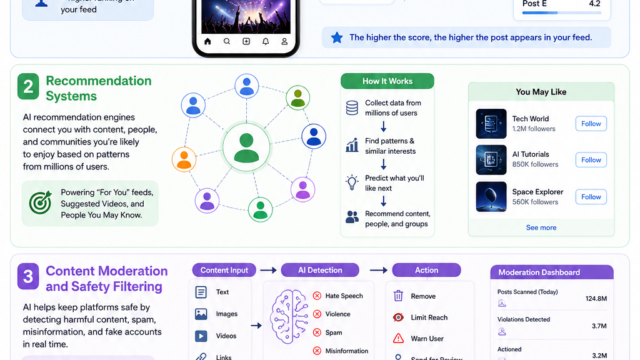
How AI Is Used in Social Media Algorithms

Artificial Intelligence (AI) is the invisible engine behind almost everything you see on social media today. From what appears on your feed to the ads you’re shown, AI systems continuously analyze behavior, predict interests, and decide what content keeps you engaged the longest.


1. Personalized Feeds and Content Ranking

Every time you scroll through platforms like Instagram, Facebook, or X, AI is working in the background to rank posts. It studies what you like, comment on, share, and even how long you pause on a post.

https://images.openai.com/static-rsc-4/ZqXnISPF2w4wUvuzkVxi-BNlI1tp5njk2Ep5ESBKLStagJD52VN4SZ63f-UGmVU0o2wT6IQLUMw0IQVkHIR76TYLKXszyjDEValdLC6i5RsorHf86CZQp8rydmlZJUh7qNyO0Db5ZtpDDFWcla_VVX5QS91tc910y2iz0Ix4zsA3a8vfsSnsuJWVT2GM5Me0?purpose=fullsize
https://images.openai.com/static-rsc-4/x32kOe9HKxb363pIMbZ7xQAGhr1bs2aPvtQIqfjfXVJQmOjk4-nl0r8TsQcNliDh8crYdHVmuVY2zo2rhS929OU0LNlI4ECV0seBu3FapkOuxgEr22laKYJdQXVj1vMEepg3x7NLd3z3PLqri5mJKCPECVDevBMzmmVlsQ_weAqnyfSvgQpXTk-8dqTtbE0b?purpose=fullsize
https://images.openai.com/static-rsc-4/JM9z-g7OB2LR74zGzJvwnM9pdiL-0KIsgmUzKXtrdBar-M2vcj4rrMenFGblJ1qFcns7g-wsQHKSyPFcVfaszVaVa0Oq7t25cyIoUr8ah1LEAEZcXFPnZkDklubQZWebLG1x0xPjZR6yOL83NMkUxXtgpZ3JYFZpdB0C_bYNg0brJTOXVNSmjUG-VCmNohn4?purpose=fullsize

9

Machine learning models assign a “relevance score” to each post. Higher scores mean the post appears closer to the top of your feed. This is why two users rarely see the same timeline in the same order.


2. Recommendation Systems (What You Should Watch Next)

Recommendation engines power features like “Suggested Videos,” “People You May Know,” and “For You Pages.”

https://images.openai.com/static-rsc-4/1B-MwKneOumo1aOCYjwR8u3RF9okfs3nLm29ZV9AQ12nWae66k8BfCOomrBI6Dl9rzB4KSq_FdMeDOjwxeLv-HH242HkxqEw75k0qWeG9-pjWmejwlEIGkoRXvl554eVftv_wQVRAXRBQGhWlHy4wKnzgoh01t7zJtwraKiWbw0YWjP1VMN1W_aUzFHvlTmo?purpose=fullsize
https://images.openai.com/static-rsc-4/_Y3c2npEqIw_atQamDUKffbVD9J1duWvP9R5bF2QBu8E0ITUvMUnbP93vToQ7tzCSy5ySN4LX_UN24eDDMSpQil_O7HEou_iPaf7auXn32E2urmTeZZj0Bi3i9KZfh8RYtf12SObsxVzmYjMFrQlaLoHpDTvNWOK8lJ8KQvYHBbOqTZt4etGg8EGvrBY3Wtw?purpose=fullsize
https://images.openai.com/static-rsc-4/18Oca6__sR1zH6-o4Mvo29MwWsi4Ii8uAPcViMzR-XErzOUwGpT1RBitMTGEHrNv6Qg9W2ouddfOQmHhVx_FswssFDiWaM4wJwZY0YnX4euO9SR-pfLFbIUEUU2X8ortkCpI8r8HvlVCE9kKkFSH8eA6huXOgJB-T8a_GLD-Cva2LPxylO2zPu-VW7Ky8XD1?purpose=fullsize

8

These systems use collaborative filtering and deep learning to connect users with similar interests. For example, if many users who like tech videos also watch AI tutorials, the algorithm will recommend AI content to you even if you’ve never searched for it.


3. Content Moderation and Safety Filtering

AI also plays a major role in keeping social platforms safe by detecting harmful content, spam, misinformation, and fake accounts.

https://images.openai.com/static-rsc-4/HOgnphyAIhjLU__JuxiPZVn1zaU18RoKVc_s-nqo6fhG0a5x4iKeaapkZBy_-av-GjJUG3JpUDbUZlnwIgA5sizIlZ0-ARqoeKOt0KgFYXqYteteMoqPa7PCIAaYJN2vybqy3VS6Vk1zhYqzYMvgsm4HH5KSySxYIiN2BZXxIYorqM55uC30vV11OWqInbKl?purpose=fullsize
https://images.openai.com/static-rsc-4/aZg9CE_dA6lkge3iHv4fuvR3Qq37_6Swl242jp1P7ux9z_udVEfsGbmH_Y_6RU5UlxKlv8ELhvvlQ2uQzGSXrpUKPQ9g3dlGo5gVmhgWuvNkRLQoO7-JYSYvYwAmcROBCOGKN5DP1UbVkH2-Ca8qx1ZbzecUgUgNH7fal439AB-b4SnbLh-gi0SmtGPdkgZf?purpose=fullsize
https://images.openai.com/static-rsc-4/VSwMec-jqFbKhIvZtAnAxlvy7lfjwsKjOkxwoM8AsdNrfLRjwHlLszUShukYxGeDALETDbPpH-sR3iaKdF0H-FYb3V8TvqkJQWrwEgos_Gy1t7iTNp-bIEhnN5TGpKI_YQr4ehFxRV9_CBNQ1eCRyxtWvhlGBOkcxgx7-fku3wfZPB5I6H24cbFeqxbxoGRo?purpose=fullsize

7

Computer vision and natural language processing models scan text, images, and videos in real time. While not perfect, these systems help remove millions of violating posts every day before humans even see them.


4. Targeted Advertising and User Profiling

One of the most powerful uses of AI in social media is advertising. Platforms use AI to decide which ads you are most likely to click or buy from.

https://images.openai.com/static-rsc-4/LtbXU-NEmFpuKHp68Dxi-uTfX6kmzuIOfre2yc3t5IQipkrPLAkXWYHsxgyE4716e5-H-k_laq6zIkcPaAVAD3d9vQnNdQGR2EXPxBSPsUKhaeuedowlTauRJDpMuSi0pk6xy9kAR_lEy1qTQJ05C1Jsk0Q0B3fQWU22L5tCYL2DeQpy0gSvWVVWGEt7CVpg?purpose=fullsize
https://images.openai.com/static-rsc-4/S_ADokusYdYdBEFUtklHOYPjV4r2mYTwW8zOmFGgiBqEkYpeJc-TDX1rL9LaXEr3NkcIZ-6R9uDpAADQ7v9PfThbNfIdbIBstvTtVApFgW0CfQf8jJjYQ0yG4pbJA6yBiqFXdVBG0j_mspNnatbMYuf-4vKDI0pHY3p-OTomgiHLP2dqU-uiDtzSSUSAGEM2?purpose=fullsize
https://images.openai.com/static-rsc-4/7vUDHCOPOFk7RPyTmuhF3znAwf6akfl49VSQaB-3BhLjRfe1aszq7H0LQ35hf6KD7lxBBuWaMhQkrZXBZaXzKGkcF_5i9uBHR7GndNzxnv1LWkL0SdzosVd1QaVies3zPK5X3L3vvtNIbR4Qtu5IEUT4kuF0xG9q5LxU1FpWD1oCcFebU3cFnRA6ncwuNqNb?purpose=fullsize

6

AI builds detailed user profiles based on demographics, interests, and behavior patterns. This allows advertisers to reach highly specific audiences, improving conversion rates while making ads feel “personally relevant.”


Conclusion

AI is deeply embedded in social media, shaping what we see, how we interact, and even what we buy. While it improves personalization and safety, it also raises concerns about privacy, echo chambers, and over-personalization.

How to Start a Career in Artificial Intelligence and Machine Learning

Starting a career in Artificial Intelligence (AI) and Machine Learning (ML) is very achievable today, but it requires a clear roadmap because the field combines math, programming, and real-world problem solving.

Here’s a structured path you can follow:


1. Understand What AI & ML Really Are

Before jumping in, get clarity:

  • Artificial Intelligence is the broader field of making machines “think” or simulate human intelligence.
  • Machine Learning is a subset of AI where systems learn patterns from data instead of being explicitly programmed.

Common areas:

  • Computer Vision (images, video)
  • Natural Language Processing (chatbots, translation)
  • Predictive Analytics (finance, business forecasting)

2. Build Strong Programming Foundations

Most AI/ML work is done in Python.

Focus on:

  • Python basics (functions, loops, OOP)
  • Libraries:
    • NumPy (math operations)
    • Pandas (data handling)
    • Matplotlib / Seaborn (visualization)

Practice platforms:

  • LeetCode (logic building)
  • HackerRank (Python practice)

3. Learn Math (Important but Practical)

You don’t need to be a mathematician, but you must understand:

  • Linear Algebra (vectors, matrices)
  • Probability & Statistics
  • Basic Calculus (gradients, optimization)

These concepts help you understand how ML models actually “learn.”


4. Learn Core Machine Learning Concepts

Start with classical ML before deep learning.

Key topics:

  • Regression (linear, logistic)
  • Classification
  • Clustering (K-Means)
  • Decision Trees & Random Forests
  • Model evaluation (accuracy, precision, recall)

Use:

  • Scikit-learn (main ML library)

5. Move to Deep Learning

Once ML basics are clear:

Learn:

  • Neural Networks
  • CNN (images)
  • RNN / Transformers (text, AI chat systems)

Frameworks:

  • TensorFlow
  • PyTorch (very popular in research & industry)

6. Work on Real Projects (Most Important Step)

Projects matter more than certificates.

Beginner ideas:

  • Spam email classifier
  • House price prediction
  • Handwritten digit recognition
  • Chatbot using NLP

Advanced ideas:

  • Fake news detection system
  • Image recognition app
  • Recommendation system (like Netflix/YouTube)

Put projects on:

  • GitHub (must-have for portfolio)

7. Learn Data Handling & Tools

Real AI work is mostly data work.

Learn:

  • SQL (databases)
  • Data cleaning techniques
  • Feature engineering
  • Basic cloud tools (AWS / Google Cloud optional)

8. Build a Portfolio + Resume

Employers look for proof of skill:

Include:

  • 3–6 strong projects
  • GitHub links
  • Kaggle profile (competitions help a lot)
  • Internship or freelance experience if possible

9. Join AI Communities

This helps you grow faster:

  • Kaggle (competitions + datasets)
  • GitHub (open-source projects)
  • Reddit / Discord AI groups
  • LinkedIn AI communities

10. Choose a Career Path

AI/ML is broad. You can specialize:

  • ML Engineer (industry-focused)
  • Data Scientist (analytics + insights)
  • AI Researcher (advanced math + innovation)
  • NLP Engineer (chatbots, language models)
  • Computer Vision Engineer (image/video AI)

11. Suggested Learning Timeline (Simple Plan)

  • Months 1–2: Python + basics of math
  • Months 3–4: Machine Learning (Scikit-learn)
  • Months 5–6: Deep Learning + first projects
  • Months 6+: Portfolio + internships + specialization