Internet telah mengubah cara masyarakat mencari informasi, berkomunikasi, dan menggunakan berbagai layanan digital. Salah satu kata kunci yang dapat ditemukan dalam pencarian daring adalah wengtoto login. Istilah tersebut menunjukkan adanya kebutuhan pengguna untuk menemukan halaman akses sebuah platform tertentu. Meskipun demikian, proses pencarian sebaiknya tidak hanya berfokus pada kemudahan menemukan halaman masuk. Pengguna juga perlu memperhatikan keamanan, kredibilitas sumber, serta risiko yang mungkin muncul ketika mengakses layanan melalui internet.
Pentingnya Mengenali Sumber yang Terpercaya
Saat mengetik wengtoto login pada mesin pencari, pengguna mungkin memperoleh banyak hasil dengan alamat situs yang berbeda. Kondisi tersebut membutuhkan sikap teliti karena tidak semua hasil pencarian memiliki sumber yang jelas. Halaman yang menggunakan nama atau tampilan menyerupai suatu platform belum tentu merupakan halaman resminya. Sebelum mengeklik sebuah tautan, pengguna sebaiknya memeriksa alamat domain dan mencari informasi pendukung dari sumber yang kredibel. Kebiasaan tersebut dapat membantu mengurangi risiko mengunjungi halaman palsu.
Menjaga Keamanan Informasi Pribadi
Informasi pribadi merupakan aset penting dalam aktivitas digital. Kata sandi, kode verifikasi, alamat email, nomor telepon, dan data pembayaran tidak seharusnya dibagikan kepada pihak yang tidak dikenal. Ketika seseorang mencari wengtoto login, perhatian terhadap permintaan data menjadi sangat penting. Jika sebuah halaman meminta informasi sensitif secara tidak wajar, pengguna sebaiknya berhenti dan melakukan pemeriksaan lebih lanjut. Penggunaan kata sandi yang kuat, unik, dan tidak mudah ditebak juga dapat meningkatkan perlindungan akun.
Waspada terhadap Tautan yang Mencurigakan
Tautan merupakan salah satu bagian yang perlu diperhatikan ketika menjelajah internet. Tautan palsu dapat dibuat dengan nama yang sangat mirip dengan alamat sebenarnya sehingga pengguna mudah terkecoh. Karena itu, pencarian wengtoto login sebaiknya dilakukan melalui sumber yang dapat diverifikasi, bukan dengan mengeklik setiap tautan yang muncul. Pesan pribadi, iklan, atau unggahan media sosial yang memberikan tautan tanpa konteks jelas juga perlu diperlakukan dengan hati-hati. Pemeriksaan alamat sebelum membuka halaman merupakan kebiasaan sederhana yang bermanfaat.
Mempertimbangkan Risiko Aktivitas Digital
Selain keamanan akun, pengguna juga perlu memahami jenis layanan yang sedang dicari. Apabila suatu platform berkaitan dengan perjudian daring atau aktivitas yang memiliki risiko finansial, pengguna harus mempertimbangkan hukum dan peraturan yang berlaku di wilayahnya. Pencarian menggunakan kata kunci wengtoto login tidak seharusnya membuat seseorang mengabaikan potensi kerugian. Pengguna perlu memahami bahwa aktivitas dengan unsur finansial dapat membawa konsekuensi tertentu dan sebaiknya tidak dilakukan secara impulsif atau berdasarkan janji keuntungan yang tidak realistis.
Membangun Literasi Digital yang Bertanggung Jawab
Literasi digital membantu seseorang membuat keputusan yang lebih aman ketika menggunakan internet. Dalam mencari informasi mengenai wengtoto login maupun layanan digital lainnya, pengguna dapat menerapkan kebiasaan seperti memeriksa sumber, membaca kebijakan privasi, menjaga kerahasiaan kredensial, dan menghindari tautan yang tidak jelas. Pengguna juga sebaiknya memastikan bahwa aktivitas yang dilakukan sesuai dengan hukum setempat serta mempertimbangkan kemampuan finansial pribadi. Dengan pendekatan yang kritis dan bertanggung jawab, internet dapat dimanfaatkan secara lebih aman tanpa mengabaikan berbagai risiko yang mungkin muncul
Perkembangan internet telah membuat berbagai istilah dan nama layanan semakin mudah dikenal masyarakat. Salah satu kata kunci yang dapat dijumpai dalam pencarian daring adalah wengtoto. Ketika sebuah istilah muncul di berbagai platform, pengguna perlu memahami informasi yang tersedia secara kritis. Tidak semua halaman internet memiliki tujuan, kualitas, dan tingkat keamanan yang sama. Karena itu, pemahaman mengenai literasi digital dapat membantu seseorang menggunakan internet dengan lebih bijaksana.
Memilah Informasi Secara Kritis
Informasi tentang wengtoto dapat ditemukan dalam berbagai bentuk, seperti artikel, forum, unggahan media sosial, maupun materi promosi. Pengguna sebaiknya tidak langsung mempercayai semua informasi yang ditemukan. Periksa sumber, tanggal publikasi, identitas penerbit, serta kesesuaian informasi dengan sumber lain. Jika terdapat klaim yang terlalu berlebihan atau sulit dibuktikan, sebaiknya lakukan pemeriksaan tambahan sebelum mempercayainya. Kebiasaan melakukan verifikasi merupakan bagian penting dari literasi digital.
Menjaga Keamanan Saat Berselancar
Keamanan menjadi aspek penting ketika seseorang mengakses situs atau layanan di internet. Tautan yang tidak dikenal dapat membawa pengguna menuju halaman phishing atau situs yang berpotensi membahayakan perangkat. Saat menemukan informasi terkait wengtoto, periksa alamat situs dengan teliti dan hindari memasukkan data sensitif pada halaman yang mencurigakan. Pengguna juga sebaiknya memperbarui sistem operasi dan aplikasi secara berkala agar perlindungan keamanan tetap optimal.
Melindungi Data Pribadi
Data pribadi perlu diperlakukan sebagai informasi yang bernilai dan tidak boleh dibagikan secara sembarangan. Kata sandi, kode OTP, nomor identitas, alamat email, dan informasi pembayaran merupakan contoh data yang harus dijaga. Ketika berinteraksi dengan layanan yang berkaitan dengan wengtoto, pengguna perlu memahami jenis informasi yang diminta serta alasan pengumpulannya. Membaca kebijakan privasi dapat membantu pengguna mengetahui bagaimana data mereka dikelola dan apakah terdapat ketentuan tertentu yang perlu diperhatikan.
Menghindari Informasi dan Promosi Menyesatkan
Lingkungan digital dipenuhi berbagai bentuk promosi yang dirancang untuk menarik perhatian. Konten mengenai wengtoto dapat muncul dalam bentuk iklan, rekomendasi, atau tautan yang menggunakan bahasa persuasif. Pengguna perlu memahami bahwa tampilan profesional tidak selalu menjadi bukti bahwa suatu sumber dapat dipercaya. Hindari keputusan tergesa-gesa, terutama ketika sebuah promosi memberikan tekanan waktu atau menawarkan hasil yang terdengar terlalu mudah. Membaca informasi secara menyeluruh dan memahami risikonya merupakan langkah yang lebih aman.
Membangun Etika Digital yang Baik
Etika digital mencakup kemampuan menggunakan teknologi dengan bertanggung jawab, menghormati privasi, serta mempertimbangkan dampak dari setiap tindakan daring. Dalam mencari informasi tentang wengtoto, pengguna sebaiknya tidak menyebarkan klaim yang belum terverifikasi atau membagikan tautan mencurigakan kepada orang lain. Selain menjaga keamanan pribadi, pengguna juga perlu mematuhi hukum dan peraturan yang berlaku di wilayahnya. Dengan menerapkan prinsip verifikasi, kehati-hatian, dan tanggung jawab, masyarakat dapat membangun lingkungan internet yang lebih aman dan informatif.
AI-Powered Personal Assistants: How They Are Changing Everyday Life 🤖📱
Artificial intelligence is becoming an increasingly visible part of everyday life. What once seemed like futuristic technology is now integrated into smartphones, computers, smart-home devices, search tools, productivity platforms, and online services. Among the most noticeable applications are AI-powered personal assistants.
Traditional digital assistants could answer simple questions, set alarms, provide weather information, or play music. Modern AI assistants are becoming more capable. They can understand natural language, summarize information, help write messages, organize tasks, explain complicated subjects, brainstorm ideas, analyze documents, and support people across many daily activities.
As these systems become more sophisticated, they are changing how people interact with technology. Instead of navigating multiple menus and applications, users can increasingly describe what they want in ordinary language.
The transformation is not limited to convenience. AI-powered assistants may influence productivity, education, communication, shopping, travel, entertainment, accessibility, and professional work.
At the same time, their growing capabilities raise important questions about privacy, accuracy, security, dependence, and responsible use.
Understanding both the opportunities and limitations of AI assistants can help people use them more effectively.
🤖 What Are AI-Powered Personal Assistants?
An AI-powered personal assistant is software that uses artificial intelligence to understand requests and provide information or perform certain tasks.
Traditional digital assistants often relied heavily on predefined commands.
Modern AI assistants can use natural-language processing and generative AI to interpret more complex requests.
For example, instead of saying a specific command to create a reminder, a user might say:
“Remind me tomorrow afternoon to prepare for my meeting.”
Depending on the system and its available integrations, the assistant may interpret the request and help create an appropriate reminder.
More advanced assistants can also work across different types of information, including text, images, audio, and documents.
🧠 From Commands to Conversations
One of the biggest changes is the shift from command-based interaction toward conversation.
Users can ask follow-up questions, clarify requests, change instructions, and continue a discussion without starting from scratch.
This makes technology feel more natural and accessible.
📅 1. Helping People Manage Daily Tasks
One of the most practical uses of AI assistants is everyday organization.
People manage appointments, deadlines, shopping lists, messages, travel plans, school assignments, and work responsibilities.
An AI assistant can help organize this information and turn vague intentions into actionable steps.
For example, a user could ask an assistant to:
Create a daily schedule
Organize a task list
Summarize a long email
Draft a reminder
Prepare a meeting checklist
Suggest ways to prioritize work
Break a large project into smaller tasks
These capabilities can reduce the amount of time spent on routine organization.
⏰ Better Time Management
AI assistants can help users identify priorities and structure their day.
However, users should still make the final decisions about important commitments.
An AI system may not understand every personal circumstance, deadline, or responsibility.
The best approach is to use AI as an organizational aid rather than allowing it to make important decisions without review.
✍️ 2. Changing the Way People Communicate
Writing is another area where AI assistants can be useful.
People can use them to draft emails, improve grammar, summarize documents, rewrite complicated sentences, or adjust the tone of a message.
For example, someone writing a professional email can ask an AI assistant to make the message clearer and more concise.
Students can use AI to brainstorm ideas or understand difficult writing concepts.
Professionals can use AI to organize notes and create initial drafts.
🗣️ Communication Becomes More Accessible
AI assistants can help people who find writing difficult or who communicate in languages other than their strongest language.
They can also help transform information between formats—for example, turning notes into a structured outline or summarizing a long document into key points.
However, users should review important communications before sending them.
AI-generated writing may contain incorrect information or fail to reflect the user’s intended meaning.
📚 3. Transforming Education
AI assistants are increasingly being used as learning tools.
Students can ask questions, request explanations, generate practice exercises, or explore unfamiliar topics.
A student struggling with a mathematical concept might ask for a simpler explanation.
A language learner might practice conversations.
A student studying history might request a timeline or comparison of events.
🎓 Personalized Learning Support
AI assistants can adapt explanations to different levels of understanding.
A beginner can request a simple explanation, while an advanced learner can ask for a more technical discussion.
This flexibility can supplement classroom learning.
However, students should use AI to support learning rather than simply copy answers.
The goal should be to understand concepts, develop reasoning skills, and become a more independent learner.
💼 4. Improving Workplace Productivity
AI assistants are becoming increasingly relevant to professional work.
Employees can use them to summarize meetings, organize information, draft documents, analyze data, prepare presentations, brainstorm ideas, and create initial versions of reports.
This can reduce time spent on repetitive tasks.
⚙️ Automating Routine Work
Many office tasks follow predictable patterns.
AI assistants may help with:
Meeting summaries
Email drafting
Document organization
Research summaries
Spreadsheet assistance
Project planning
Customer-service responses
Content creation
Basic data analysis
Automation can free employees to spend more time on complex work that requires human judgment.
However, organizations need policies governing what information employees can safely share with AI systems.
🏠 5. Making Smart Homes More Intelligent
AI assistants can also interact with connected home devices.
Depending on the available technology, users may be able to control lights, thermostats, appliances, entertainment systems, or security devices through voice or text.
The combination of AI and smart-home technology could make home automation more conversational.
Instead of remembering specific commands, users could describe what they want in natural language.
💡 More Context-Aware Homes
Future systems may become better at understanding context.
For example, an assistant might help coordinate a household schedule or remind users about recurring tasks.
However, smart-home systems also create privacy and cybersecurity considerations because connected devices can collect information about people’s homes and routines.
🛒 6. Changing Shopping and Consumer Decisions
AI assistants can also influence how people shop.
They can help users compare products, summarize specifications, organize shopping lists, and identify features that match their needs.
Instead of browsing hundreds of product pages, consumers may increasingly ask AI systems to narrow down options.
🔎 Smarter Product Research
For example, someone shopping for a laptop might ask an AI assistant to compare battery life, performance, portability, and price ranges.
However, consumers should verify important specifications and current prices before making purchasing decisions.
AI-generated recommendations can be incomplete or outdated.
✈️ 7. Simplifying Travel Planning
Travel planning often involves coordinating transportation, accommodation, activities, budgets, and schedules.
AI assistants can help users organize these elements.
They can generate itinerary ideas, summarize destination information, suggest questions to ask hotels or airlines, and help create packing lists.
🌍 Personalized Travel Assistance
An AI assistant can potentially adapt suggestions according to factors such as:
Trip duration
Budget
Interests
Transportation preferences
Accessibility needs
Travel companions
However, travelers should verify important details such as visa requirements, opening hours, transportation schedules, cancellation policies, and local regulations.
AI can assist with planning, but current official information should remain the final authority for time-sensitive travel requirements.
💰 8. Supporting Personal Finance
AI assistants can help people organize financial information and learn basic financial concepts.
For example, they can explain terms such as:
Budgeting
Compound interest
Inflation
Credit
Saving
Investment diversification
They can also help users create simple budgeting frameworks.
However, financial decisions can have significant consequences.
AI assistants should not automatically be treated as financial advisors, particularly when decisions involve investments, taxes, loans, insurance, or substantial amounts of money.
Users should verify financial information with reliable sources and qualified professionals when appropriate.
🩺 9. Supporting Health Information
AI assistants are increasingly being used to help people understand general health information.
They can explain medical terminology, summarize publicly available health information, or help users prepare questions for a healthcare professional.
For example, a person may ask an AI system to explain a medical term in simpler language.
⚠️ AI Is Not a Substitute for Medical Professionals
AI systems can make mistakes and may not have access to a person’s complete medical history.
They should not be relied upon to diagnose serious conditions or replace professional medical care.
For urgent or concerning symptoms, people should seek appropriate medical assistance rather than relying on an AI chatbot.
🧑🦽 10. Improving Accessibility
AI assistants may have an especially meaningful impact on accessibility.
People with certain disabilities can use voice interaction, speech-to-text, text-to-speech, image descriptions, summarization, and other AI-supported features.
For example, AI can help describe visual information or convert spoken language into written text.
These capabilities can make digital services easier to use for some people.
Accessibility improvements will depend on thoughtful design and reliable implementation.
🌐 11. Breaking Language Barriers
Translation and language support are another important application.
AI assistants can help users translate text, practice languages, explain unfamiliar phrases, and communicate across languages.
This can support international communication, education, tourism, and business.
However, translation quality can vary, especially with specialized terminology, cultural expressions, or less widely represented languages.
Important legal, medical, or business documents may still require professional translation or verification.
🎨 12. Supporting Creativity
AI assistants can also act as brainstorming partners.
Writers can use them to generate ideas.
Designers can explore concepts.
Entrepreneurs can brainstorm business models.
Students can develop project ideas.
Musicians and filmmakers can experiment with creative directions.
The value of AI in creativity is often greatest when humans remain actively involved.
💡 AI as a Creative Collaborator
Instead of asking AI to create everything, users can ask it to provide alternatives, challenge assumptions, identify weaknesses, or suggest new directions.
This keeps the human creator at the center of the process.
🔍 13. Making Information Easier to Understand
The internet contains enormous amounts of information.
AI assistants can help users summarize lengthy material and explain difficult concepts.
A user can provide a complex document and ask for:
A short summary
Key points
A list of important terms
Questions for further study
A simplified explanation
A structured outline
This can reduce the cognitive burden associated with processing large amounts of information.
However, summaries can omit important context.
For important decisions, users should review the original source material.
🧠 14. Helping People Learn New Skills
AI assistants can function as interactive learning companions.
Someone learning programming can ask for explanations of errors.
A beginner learning a language can practice conversations.
Someone learning business can ask for examples of marketing strategies.
A student can request practice questions and explanations.
The interactive nature of AI can make self-directed learning more accessible.
The key is active participation.
People learn more effectively when they attempt problems, receive feedback, and reflect on mistakes rather than simply asking AI to complete everything for them.
🔐 15. Privacy and Personal Data
The convenience of AI assistants comes with privacy considerations.
Personal assistants may process information about schedules, preferences, communications, documents, locations, or other personal activities depending on how they are configured.
Users should understand what information a particular AI service collects, how it is stored, and how it may be used.
🛡️ Practical Privacy Habits
Users can improve privacy by:
Avoiding unnecessary sharing of sensitive information
Reviewing privacy settings
Using strong account security
Enabling multi-factor authentication where available
Checking which applications have access to personal data
Reviewing connected services regularly
People should be especially cautious about entering passwords, financial credentials, confidential business information, or highly sensitive personal data into AI systems unless they understand the relevant security protections.
⚠️ 16. Accuracy and AI Hallucinations
AI assistants can sometimes generate information that sounds convincing but is incorrect.
This phenomenon is often called an AI hallucination.
The problem becomes particularly important when people assume that fluent language automatically means factual accuracy.
AI assistants may make errors involving:
Dates
Names
Statistics
Citations
Technical details
Legal information
Medical information
Product specifications
🔎 Verify Important Information
The more important the decision, the more carefully information should be verified.
Users should consult authoritative sources for legal, medical, financial, academic, and other high-stakes information.
🧑⚖️ 17. Ethical Questions About AI Assistants
As AI assistants become more capable, ethical questions become increasingly important.
Who is responsible if an AI assistant makes a harmful recommendation?
How should personal data be protected?
Should AI systems reveal when content was generated by AI?
How much autonomy should an assistant have?
What decisions should always require human approval?
These questions will influence the design and regulation of future AI systems.
🔄 18. The Evolution From Assistants to Agents
Today’s AI assistants are increasingly moving toward more agent-like capabilities.
A simple assistant answers questions.
A more advanced system may potentially perform multi-step tasks.
For example, instead of simply suggesting how to organize a project, an agent could potentially create a task list, draft documents, update approved software systems, and notify team members.
This transition could significantly increase productivity.
But greater autonomy also means greater responsibility.
Systems need appropriate permissions, monitoring, and safeguards to prevent unintended actions.
🏢 19. AI Assistants in Small Businesses
Small businesses may benefit significantly from AI assistants.
A small company with limited staff can use AI tools for tasks such as:
Drafting marketing content
Organizing customer inquiries
Creating internal documentation
Summarizing meetings
Researching competitors
Brainstorming products
Preparing basic reports
This can allow small teams to perform tasks that previously required more time or specialized resources.
However, businesses must protect confidential customer and company information.
📈 20. Changing the Nature of Productivity
AI assistants may change how productivity is measured.
In the past, productivity often meant how quickly a person could complete a task manually.
In an AI-assisted workplace, productivity may increasingly depend on how effectively a person can define objectives, provide context, evaluate AI outputs, and make final decisions.
This means human judgment becomes even more important.
🧭 From Doing Everything to Directing Work
Professionals may increasingly act as supervisors of AI-assisted workflows.
They may spend less time performing repetitive tasks and more time deciding what should be done, checking quality, and handling exceptions.
This could reshape many job roles.
🌱 21. The Importance of Human Skills
The growth of AI does not make human skills irrelevant.
In many cases, it makes them more valuable.
Skills such as:
Critical thinking
Creativity
Empathy
Leadership
Communication
Ethical judgment
Collaboration
Decision-making
remain essential.
AI can provide suggestions, but humans must determine whether those suggestions are appropriate.
🔮 22. What the Future May Look Like
The next generation of AI assistants may become more integrated across devices and applications.
Instead of having separate tools for email, calendars, documents, travel, shopping, and productivity, users may interact with a unified AI interface that can coordinate information across approved services.
Assistants may become more multimodal, understanding voice, text, images, video, and documents.
They may also become more personalized and capable of handling longer workflows.
However, the future will depend heavily on privacy protections, technical reliability, regulation, user trust, and responsible design.
🌟 Conclusion
AI-powered personal assistants are changing everyday life by making technology more conversational, accessible, and capable.
🤖 They can help people organize tasks.
📚 They can support learning.
💼 They can improve workplace productivity.
✍️ They can assist with communication.
🌍 They can support travel planning and language translation.
🧑🦽 They can improve accessibility.
🎨 They can support creativity and brainstorming.
At the same time, AI assistants have important limitations.
They can make mistakes, produce misleading information, create privacy concerns, and encourage overdependence if used without appropriate judgment.
The best way to use AI assistants is therefore not to treat them as perfect digital replacements for human thinking.
Instead, they should be viewed as powerful tools that can extend human capabilities.
The future of personal AI is likely to involve deeper integration into everyday devices and services. As these systems become more capable, people will need not only better AI technology but also better AI literacy.
Knowing what to ask, what to trust, what to verify, and what should remain a human decision will be essential.
The real transformation will not simply be that computers become more intelligent.
It will be that people learn how to work with intelligent systems in ways that are productive, safe, private, and responsible. 🤖🌍✨
Introduction: The Expanding World of AI Research 🌎✨
Artificial Intelligence (AI) research is one of the most important fields shaping the future of science, technology, and society. Researchers around the world are working to develop intelligent systems that can learn, understand information, solve complex problems, and assist humans in new and innovative ways.
AI research combines computer science, mathematics, neuroscience, engineering, and many other disciplines to explore how machines can perform tasks that traditionally require human intelligence.
🔬 From advanced medical discoveries to intelligent automation, AI research is creating solutions that influence almost every aspect of modern life.
Today, AI researchers focus on developing technologies that can:
🤖 Understand human language
🧠 Learn from large amounts of data
👁️ Recognize images and patterns
📊 Predict future outcomes
🌍 Solve global challenges
The continuous progress of AI research is opening new possibilities for innovation while also creating important discussions about ethics, safety, and responsible development.
Understanding Artificial Intelligence Research 🧠📚
AI research is the scientific exploration of methods and technologies that allow machines to demonstrate intelligent behavior.
Unlike simple computer programs that follow fixed instructions, AI systems are designed to learn, adapt, and improve through experience.
Researchers study different areas of artificial intelligence, including:
Machine Learning Research 📈🤖
Machine learning is one of the largest areas of AI research. It focuses on creating algorithms that allow computers to learn from data.
Researchers develop machine learning models that can:
🔍 Detect patterns
📊 Analyze information
🎯 Make predictions
⚙️ Improve performance over time
Machine learning research supports many applications, including recommendation systems, fraud detection, healthcare analysis, and automated decision-making.
Deep Learning Research 🧬🚀
Deep learning is an advanced field of AI research based on artificial neural networks.
These networks are inspired by the structure of the human brain and contain multiple layers that process information.
Deep learning research has improved technologies such as:
📷 Image recognition
🎙️ Speech understanding
🌐 Language translation
🚗 Autonomous vehicles
🧪 Scientific discovery
Researchers continue improving deep learning systems to make them faster, more accurate, and more efficient.
The History and Evolution of AI Research 🕰️💡
The journey of artificial intelligence research began decades ago with early computer science experiments.
Early researchers imagined creating machines capable of reasoning and problem-solving. Over time, improvements in computing power and access to large datasets accelerated AI development.
Important stages in AI research include:
Early AI Development 💻
Initial AI studies focused on symbolic reasoning and creating systems that could solve specific problems.
Machine Learning Growth 📊
Researchers later developed methods that allowed computers to learn from data rather than relying only on programmed rules.
Deep Learning Revolution 🚀
Modern AI research has been transformed by neural networks, powerful computing systems, and massive datasets.
Today, AI research continues to expand into areas such as generative AI, robotics, and human-computer interaction.
Major Areas of AI Research 🔬🌐
AI research includes many specialized fields that contribute to technological progress.
Natural Language Processing (NLP) 📝💬
Natural Language Processing focuses on enabling computers to understand and generate human language.
Researchers work on:
🗣️ Voice assistants
🌍 Translation systems
💬 Conversational AI
📄 Text analysis
NLP research helps machines communicate more naturally with humans.
Computer Vision 👁️📷
Computer vision allows machines to understand and interpret visual information.
AI researchers develop systems that can analyze:
🖼️ Images
🎥 Videos
🏥 Medical scans
🚦 Real-world environments
Computer vision applications include healthcare technology, security systems, manufacturing automation, and autonomous vehicles.
Robotics and Intelligent Machines 🤖⚙️
AI research plays an important role in creating advanced robots that can interact with the physical world.
Robotics researchers combine:
🧠 Artificial intelligence
⚙️ Mechanical engineering
📡 Sensors
💻 Software development
AI-powered robots are being developed for industries such as healthcare, manufacturing, exploration, and education.
AI Research in Healthcare and Medicine 🏥🧬
Healthcare is one of the most promising areas for AI research. Scientists are exploring how artificial intelligence can improve diagnosis, treatment, and medical discoveries.
AI research supports:
🔬 Drug discovery
🩺 Medical image analysis
📊 Patient data management
🧪 Disease prediction
AI systems can analyze large amounts of medical information and help healthcare professionals make better decisions.
For example, AI models can examine medical images to identify patterns that may be difficult to detect manually.
The future of healthcare may involve stronger collaboration between doctors, scientists, and intelligent systems.
AI Research and Scientific Discovery 🌌🔍
Artificial intelligence is becoming an important tool for scientific research.
Researchers use AI to analyze complex datasets and discover patterns in areas such as:
🌱 Climate science
🧪 Chemistry
🌊 Ocean studies
🔭 Astronomy
🧬 Biology
AI can process information at speeds that help scientists explore questions that were previously difficult to solve.
For example, AI models can assist researchers in discovering new materials, understanding biological processes, and predicting environmental changes.
The Role of Data in AI Research 📊💾
Data is one of the most important resources in artificial intelligence research.
AI researchers use data to train and evaluate intelligent systems.
The AI research process often involves:
📥 Collecting data
🧹 Cleaning information
🏷️ Organizing datasets
🧠 Training models
📈 Evaluating results
High-quality data helps create more reliable and accurate AI systems.
Researchers also focus on responsible data management to protect privacy and reduce bias.
Introduction: From Searching the Web to Asking the Web
For more than two decades, the internet has been built around one simple action: searching. People opened a browser, typed keywords into a search engine, scanned through pages of results, clicked links, and collected information themselves. Search engines became the gateway to the digital world, helping billions of people discover websites, news, products, research papers, and entertainment.
However, the internet is entering a new phase. Artificial intelligence is changing not only how we search, but also how we interact with information itself. Instead of receiving a list of links, users are increasingly receiving direct answers, summaries, recommendations, and personalized explanations.
The future of online discovery may no longer be about finding the right webpage. It may be about having an intelligent system understand the question, analyze information from multiple sources, and provide the most useful response instantly.
This shift represents the beginning of a new internet era — an era powered by AI search, conversational interfaces, and intelligent digital assistants.
1. The Evolution of Internet Search
From Keywords to Understanding Intent
Traditional search engines were designed around keywords. If someone searched for “best smartphone under $500,” the search engine would identify pages containing those words and rank them based on relevance, popularity, and authority.
Although modern search engines became extremely advanced, the basic model remained similar: query → results → human evaluation.
AI is changing this process by focusing on user intent rather than only matching words.
For example, instead of searching:
“What are the symptoms of vitamin D deficiency?”
A user can ask:
“I feel tired every day despite sleeping enough. Could vitamin D deficiency be one reason?”
AI systems can understand context, interpret the problem, and provide a structured explanation rather than simply showing a collection of websites.
This represents a major transformation:
Old Internet:
User searches
Search engine provides links
User reads and compares information
AI Internet:
User asks questions
AI understands intent
AI creates a personalized answer
The internet is moving from a library model toward a conversation model.
2. The Rise of AI Search Engines
AI-powered search engines are becoming the next generation of information discovery. Instead of displaying only ranked pages, they combine search technology with large language models capable of reasoning, summarizing, and generating responses.
Companies developing AI search experiences are attempting to create systems that act more like research assistants than traditional search tools.
These AI search platforms can:
Understand complex questions
Combine information from multiple sources
Summarize long documents
Explain complicated topics simply
Compare products and services
Help users make decisions
For example, someone planning a vacation might traditionally search dozens of websites for flights, hotels, weather information, and attractions.
An AI search assistant could potentially analyze these factors and provide:
Suggested destinations
Travel schedules
Budget estimates
Recommended activities
Personalized advice
The search experience becomes less about browsing and more about collaboration.
3. Answer-Based Browsing: The End of Endless Clicking?
One of the biggest changes AI brings to the internet is answer-based browsing.
For years, websites competed to attract visitors through search rankings. Users clicked multiple links, opened different tabs, and spent time filtering information.
AI introduces a new possibility: receiving a complete answer immediately.
Imagine asking:
“Explain climate change in simple terms for a school student.”
Instead of opening ten educational websites, an AI assistant can create a customized explanation based on the user’s needs.
This creates several advantages:
Faster Information Access
People can save time by getting summaries instead of manually researching dozens of sources.
Personalized Learning
AI can adjust explanations based on someone’s knowledge level.
A beginner may receive a simple explanation, while an expert may receive technical details and research references.
Better Decision Making
AI can compare information and highlight important differences.
For example:
Comparing laptops
Choosing financial products
Understanding medical research
Planning education paths
The internet becomes more interactive and intelligent.
4. How AI Is Transforming Online Discovery
Shopping Becomes Conversational
E-commerce discovery is one area where AI could create major changes.
Traditional online shopping requires users to:
Search products
Compare reviews
Check specifications
Read customer feedback
AI shopping assistants can simplify this process.
A user might ask:
“I need a lightweight laptop for programming and travel under $1,000.”
An AI system can analyze requirements and suggest suitable options based on performance, price, and user preferences.
Shopping becomes less about browsing thousands of products and more about having a personal digital advisor.
News Consumption Becomes Personalized
The way people consume news is also changing.
Traditional news websites present the same articles to millions of readers. AI systems can create personalized news experiences based on:
User interests
Reading habits
Preferred explanation style
Knowledge level
Instead of simply reading headlines, users may receive AI-generated summaries, background explanations, and different perspectives.
However, this also creates challenges around misinformation, bias, and the importance of verifying sources.
Education Moves Toward AI Learning Companions
Education may experience one of the biggest transformations.
Students traditionally depend on textbooks, teachers, and online resources. AI can provide personalized tutoring available anytime.
An AI learning assistant can:
Explain difficult concepts
Generate practice questions
Review writing
Provide feedback
Adjust lessons based on progress
Every learner could potentially have access to a personalized digital tutor.
5. The Changing Role of Websites and Content Creators
The rise of AI search creates important questions for the future of websites.
For years, businesses and creators focused on search engine optimization (SEO) to appear higher in search results.
The AI era introduces a new challenge:
How can content become valuable enough for AI systems to recognize and recommend?
Future content strategies may focus more on:
Original research
Expert insights
Unique experiences
Accurate information
Strong credibility
Simply creating content filled with keywords may no longer be enough.
The internet may reward creators who provide genuine value rather than content designed only for rankings.
6. The Challenges of the AI Internet
While AI-powered discovery offers enormous benefits, it also introduces risks.
Information Accuracy
AI systems can sometimes produce incorrect or incomplete answers. Users may need to verify important information, especially in areas such as health, law, and finance.
Privacy Concerns
AI assistants that understand user preferences may collect large amounts of personal information.
Questions about data ownership and privacy will become increasingly important.
Reduced Website Traffic
If users receive answers directly from AI, fewer people may visit original websites. This could impact publishers, bloggers, and online businesses.
Algorithmic Bias
AI systems learn from existing information, which means they may reflect biases present in their training data.
Building transparent and responsible AI systems will be essential.
7. The Future: A More Intelligent Digital World
The next generation of the internet may not be defined by websites, apps, or search boxes. Instead, it may be defined by intelligent interfaces that understand human needs.
Future AI systems could become:
Personal research assistants
Digital teachers
Shopping advisors
Business analysts
Creative partners
Everyday problem solvers
The internet could evolve from a place where humans search for information into a world where information actively comes to humans.
Instead of asking:
“Where can I find this information?”
People may simply ask:
“Help me understand this.”
AI will become the bridge between human curiosity and the massive amount of knowledge available online.
Conclusion: The Beginning of a New Information Age
The internet is undergoing one of its biggest transformations since the rise of search engines and smartphones. AI is changing the way humans discover, understand, and use information.
AI search engines, conversational assistants, and answer-based browsing are creating a more personalized and efficient digital experience. The future internet will not simply connect people to information — it will help people make sense of that information.
However, this new era will require balance. Accuracy, privacy, transparency, and human judgment will remain essential.
The next internet revolution is not about finding more information. It is about creating a smarter relationship between humans, technology, and knowledge itself.
Artificial Intelligence is transforming the global workforce at an unprecedented pace. From automating repetitive tasks to enhancing creativity and decision-making, AI has become an essential part of modern workplaces. While some fear AI will replace jobs, the reality is more nuanced. AI is creating new opportunities while changing the skills employers expect from workers.
The future belongs to professionals who know how to work alongside AI rather than compete with it. Whether you’re a student, freelancer, entrepreneur, or corporate employee, learning AI-related skills today can significantly improve your career prospects.
In this article, we’ll explore the most in-demand AI skills, why they matter, and how you can prepare for the AI-powered workplace of tomorrow.
🚀 Why AI Is Changing the Job Market
AI adoption has accelerated across industries including healthcare, finance, education, software development, manufacturing, retail, and marketing. Organizations are using AI to improve productivity, reduce costs, and deliver better customer experiences.
Instead of replacing every worker, AI is automating repetitive tasks while increasing demand for people who can:
Solve complex problems
Think critically
Create innovative solutions
Work effectively with AI systems
Make ethical decisions
The workforce is shifting from performing routine tasks to supervising, guiding, and enhancing AI-powered processes.
1. Prompt Engineering
What Is Prompt Engineering?
Prompt engineering is the practice of writing clear, structured instructions that help AI models produce accurate and useful outputs.
Rather than simply asking an AI tool a question, prompt engineers understand how to:
Provide context
Set goals
Define output formats
Reduce hallucinations
Improve consistency
Good prompts produce dramatically better results.
Example
Instead of:
Write about AI.
Use:
Write a 1,500-word beginner-friendly article about AI in healthcare. Include five headings, practical examples, FAQs, and a conclusion optimized for SEO.
The second prompt delivers much more useful results.
Why Prompt Engineering Matters
Companies increasingly use AI for:
Content creation
Customer support
Research
Programming
Data analysis
Marketing
Sales
Employees who can effectively communicate with AI save significant amounts of time.
Skills to Learn
Context writing
Prompt frameworks
Chain-of-thought alternatives (where appropriate)
Role prompting
Iterative prompting
AI evaluation techniques
Output refinement
2. AI Literacy
What Is AI Literacy?
AI literacy means understanding how AI works, what it can do, and where its limitations lie.
You don’t need to become a machine learning engineer.
Instead, AI literacy means knowing:
What AI can automate
When AI makes mistakes
How data affects results
How bias can occur
When humans should review outputs
Why Employers Value AI Literacy
Employees with AI literacy:
Work faster
Make fewer AI-related mistakes
Choose the right AI tools
Improve productivity
Use AI responsibly
Nearly every profession now benefits from basic AI knowledge.
Examples
Marketing
AI generates campaign ideas.
Humans evaluate strategy.
Healthcare
AI assists diagnosis.
Doctors make final decisions.
Finance
AI detects fraud.
Analysts investigate suspicious activity.
3. Workflow Automation
One of AI’s biggest impacts is reducing repetitive work through automation.
What Is Workflow Automation?
Workflow automation combines AI with software to automate business processes.
Examples include:
Email responses
Report generation
Meeting summaries
Customer support
Invoice processing
CRM updates
Social media scheduling
Example Workflow
Customer submits inquiry
↓
AI categorizes request
↓
Creates draft response
↓
Human reviews
↓
Automatically sends email
This saves time while maintaining quality control.
Valuable Skills
Learn how to:
Connect apps
Build automated workflows
Integrate AI into business processes
Monitor automation quality
Optimize efficiency
4. Human-AI Collaboration
The future is not humans versus AI.
It’s humans with AI.
Professionals who collaborate effectively with AI will outperform those who ignore it.
Human Strengths
Humans excel at:
Creativity
Leadership
Empathy
Ethics
Strategic thinking
Relationship building
Critical judgment
AI Strengths
AI excels at:
Speed
Pattern recognition
Data processing
Repetitive work
Summarization
Prediction
Content generation
The Best Teams Combine Both
Example:
A designer uses AI to generate 50 design concepts.
The designer selects the best idea.
Refines it.
Adds creativity.
Produces the final product.
AI accelerates creativity—it doesn’t replace it.
5. Critical Thinking
As AI-generated content becomes more common, employers increasingly value professionals who can verify information and make sound judgments.
Important abilities include:
Fact-checking
Source evaluation
Logical reasoning
Risk assessment
Decision-making
Never assume AI output is always correct.
6. Data Literacy
Data drives AI systems.
Understanding data helps employees make better business decisions.
Skills include:
Reading dashboards
Understanding KPIs
Basic statistics
Data visualization
Identifying trends
Interpreting AI insights
Even non-technical professionals benefit from these skills.
7. AI-Assisted Communication
AI helps professionals:
Write emails
Create presentations
Draft reports
Summarize meetings
Translate content
Brainstorm ideas
The key skill is editing and improving AI-generated content rather than accepting it without review.
8. Digital Adaptability
AI tools evolve rapidly.
Workers who continuously learn new tools will remain competitive.
Employers increasingly value adaptability over mastery of any single platform.
Develop habits such as:
Testing new AI tools
Learning through online courses
Following industry updates
Experimenting with workflows
9. Ethical AI Awareness
Organizations are paying more attention to responsible AI use.
Employees should understand:
Data privacy
Intellectual property
Bias in AI systems
Transparency
Security
Responsible AI practices
Ethical awareness builds trust and reduces organizational risk.
Industries Hiring AI-Skilled Professionals
AI-related skills are in demand across many sectors, including:
💻 Software Development
📈 Digital Marketing
🏥 Healthcare
🎓 Education
🏦 Banking & Finance
🛒 E-commerce
⚖️ Legal Services
📊 Business Analytics
🎨 Design & Creative Media
🏭 Manufacturing
🚚 Logistics
📱 Customer Support
How to Prepare for AI Jobs
Start with these practical steps:
Learn the fundamentals of AI and machine learning concepts.
Practice writing effective prompts for different tasks.
Use AI tools to automate simple workflows.
Develop strong critical thinking and communication skills.
Build a portfolio showcasing AI-assisted projects.
Stay informed about new AI tools and workplace trends.
Understand AI ethics, privacy, and responsible use.
Collaborate with AI regularly to improve efficiency and creativity.
Common AI Job Roles Emerging
Some of the fastest-growing AI-related roles include:
Role
Primary Focus
Prompt Engineer
Designing effective prompts for AI systems
AI Product Manager
Building AI-powered products
AI Trainer
Improving AI performance through feedback
Automation Specialist
Creating AI-driven workflows
AI Content Strategist
Managing AI-assisted content production
Data Analyst
Interpreting AI-generated insights
AI Consultant
Helping organizations adopt AI effectively
AI Operations Specialist
Monitoring and optimizing AI systems
Human-AI Interaction Designer
Improving user experiences with AI
Final Thoughts
Artificial Intelligence is reshaping the future of work, but it is not eliminating the need for human talent. Instead, it is changing what employers value. Skills such as prompt engineering, AI literacy, workflow automation, human-AI collaboration, critical thinking, and ethical decision-making are becoming essential across industries.
The professionals who thrive in the coming years will be those who embrace AI as a partner, continuously learn new technologies, and focus on uniquely human strengths like creativity, judgment, communication, and empathy. By investing in these skills today, you can stay competitive and build a resilient career in the AI-powered economy.
🌟 Introduction: The New Era of Software Development
Software development is entering a major transformation with the rise of AI coding assistants. These intelligent tools are changing how developers write code, solve problems, debug errors, and optimize applications.
In the past, developers spent significant time writing repetitive code, searching documentation, and fixing common programming issues. Today, AI-powered coding tools can assist throughout the entire development process.
Rather than replacing developers, AI coding assistants are becoming collaborative partners that help programmers work faster, smarter, and more creatively.
The future of software development will be built around human creativity combined with AI-powered productivity. 💡💻
🤖 1. What Are AI Coding Assistants?
AI coding assistants are artificial intelligence tools designed to support developers during software creation.
These tools use machine learning and large language models to understand programming languages, analyze code, and provide helpful suggestions.
🤖 Android 17 and Gemini Integration: How AI Is Changing Smartphone Usage
Artificial Intelligence has rapidly evolved from being a simple voice assistant into the driving force behind modern smartphones. With Android 17 expected to deepen its AI capabilities alongside Google Gemini, smartphones are becoming more intelligent, proactive, and personalized than ever before.
Instead of waiting for users to open apps or manually complete tasks, AI-powered smartphones are beginning to understand context, anticipate needs, and perform complex actions with minimal input.
In this article, we’ll explore how Android 17 and Gemini integration are reshaping the smartphone experience and what users can expect in the coming years.
What is Android 17?
Android 17 represents the next evolution of Google’s mobile operating system. While every Android release introduces improvements in performance, security, and battery optimization, Android 17 is expected to focus heavily on Artificial Intelligence.
Key expected improvements include:
Smarter notifications
AI-powered personalization
Better battery optimization
Improved privacy controls
Advanced voice interactions
Enhanced multitasking
AI-generated summaries
Intelligent search
Rather than adding isolated AI features, Android 17 aims to make AI an integral part of the operating system.
Understanding Google Gemini
Google Gemini is Google’s multimodal AI model capable of understanding:
Text
Images
Voice
Documents
Videos
Contextual information
Unlike traditional assistants that rely on scripted responses, Gemini can reason through problems, generate content, summarize information, answer questions, and automate everyday tasks.
This makes smartphones far more capable than simple communication devices.
AI Becomes Your Personal Assistant
One of the biggest advantages of Gemini integration is that your smartphone becomes a genuine personal assistant.
Instead of asking:
“Open Calendar”
You can simply say:
“Schedule lunch with Sarah next week after my meeting.”
Gemini can:
Check your calendar
Find available time
Create the event
Send invitations
Suggest restaurants
Add reminders
This level of automation saves significant time.
Smarter Voice Commands
Traditional voice assistants often struggle with complex requests.
Gemini changes that.
Examples include:
“Summarize today’s emails.”
“Translate this conversation.”
“Find the recipe I viewed yesterday.”
“Create a shopping list from this YouTube video.”
“Write an email thanking my manager.”
The assistant understands natural language instead of relying on exact phrases.
AI-Powered Search Across Your Phone
Imagine searching your phone like searching Google.
Instead of remembering filenames, you can ask:
“Show me the picture from my Goa trip.”
“Find the invoice PDF from last month.”
“Locate the screenshot about mutual funds.”
Gemini understands meaning instead of just keywords.
Intelligent Photo Organization
Managing thousands of photos becomes much easier.
Gemini can automatically:
Group vacations
Detect birthdays
Organize receipts
Identify pets
Separate documents
Remove duplicate images
Searching becomes conversational.
Example:
“Show sunset photos from last summer.”
AI Writing Assistance Everywhere
Typing on smartphones becomes significantly easier.
Gemini can help users:
Write emails
Reply to messages
Improve grammar
Rewrite text professionally
Generate captions
Summarize articles
Translate instantly
Students, professionals, and content creators all benefit from AI-assisted writing.
Smarter Notifications
Notification overload is a common problem.
Android 17 could use AI to:
Prioritize urgent messages
Group similar notifications
Hide spam
Suggest quick replies
Summarize multiple messages
Instead of reading dozens of notifications, users receive concise summaries.
Battery Optimization Through AI
AI can learn daily habits.
For example:
Apps rarely used remain inactive.
Frequently used apps load faster.
Charging patterns improve battery lifespan.
Background activity becomes smarter.
This improves both battery life and overall performance.
Real-Time Language Translation
Gemini can support seamless communication.
Potential uses include:
Live conversations
Video calls
Messaging
Email translation
Travel assistance
Travelers and international professionals benefit greatly from instant translations.
AI in Camera Features
Modern smartphone cameras already rely heavily on AI.
Android 17 may expand this with:
Better night photography
AI object removal
Automatic image enhancement
Smart framing
Background replacement
Video stabilization
AI-generated photo edits
Photography becomes more accessible for everyone.
Personalized Home Screen
AI may automatically adjust your home screen depending on:
Location
Time of day
Work schedule
Travel
Weather
Driving mode
Morning widgets could prioritize:
Calendar
Weather
News
Evening widgets may highlight:
Entertainment
Fitness
Smart home controls
AI Security Features
Security continues to improve with AI.
Possible features include:
Scam detection
Phishing protection
Fake call identification
Malware detection
Fraud alerts
Smart permission management
AI helps identify suspicious behavior before users interact with harmful content.
Better Multitasking
Gemini can understand multiple ongoing tasks.
Examples include:
Reading a PDF while taking notes
Watching videos while generating summaries
Comparing products across websites
Creating presentations from documents
The smartphone becomes a productivity hub.
AI for Students
Students can use Gemini to:
Solve math problems
Summarize chapters
Create flashcards
Explain concepts
Translate notes
Generate quizzes
Improve writing
Learning becomes faster and more interactive.
AI for Professionals
Working professionals can:
Draft reports
Organize meetings
Analyze spreadsheets
Write emails
Generate presentations
Manage schedules
Summarize documents
Many repetitive tasks become automated.
AI for Content Creators
Creators gain powerful tools including:
Caption generation
Thumbnail ideas
Script writing
Video summaries
SEO suggestions
Hashtag recommendations
Image editing
Content production becomes faster without sacrificing creativity.
Privacy Considerations
As AI becomes more integrated into smartphones, privacy remains an important consideration. Many AI features increasingly combine on-device processing with secure cloud capabilities, giving users more control over what information is shared. Reviewing app permissions, keeping software updated, and understanding AI settings can help users make informed choices about their data.
The Future of Android AI
The next generation of smartphones will increasingly move beyond responding to commands toward anticipating user needs. Future AI experiences may include:
Predictive scheduling
Smarter automation
Enhanced accessibility
Personalized learning
Health and wellness insights
Cross-device assistance
Context-aware recommendations
As these capabilities mature, smartphones are likely to become more proactive companions for work, study, and everyday life.
Conclusion
Android 17’s closer integration with Gemini represents a significant step toward more intelligent mobile experiences. Rather than acting as a separate application, AI is becoming woven into everyday smartphone interactions—from communication and photography to productivity and accessibility.
For users, this means less time navigating menus and more time focusing on what they want to accomplish. As AI continues to evolve, smartphones are poised to become even more capable assistants that understand context, simplify routine tasks, and provide personalized support throughout the day.
Smart devices have become an essential part of modern life. From smartphones and smartwatches to intelligent home appliances and voice assistants, these connected technologies have transformed how people communicate, work, learn, shop, and entertain themselves. Thanks to rapid advancements in artificial intelligence (AI), the Internet of Things (IoT), cloud computing, and wireless connectivity, smart devices are becoming more intelligent, efficient, and personalized than ever before.
In recent years, the adoption of smart technology has accelerated worldwide. Homes are becoming smarter, workplaces more productive, and healthcare more accessible through connected devices. As technology continues to evolve, smart devices are expected to play an even bigger role in shaping our daily experiences.
📲 What Are Smart Devices?
Smart devices are electronic gadgets that can connect to the internet or other devices, collect data, process information, and perform tasks automatically or with minimal human intervention.
Common examples include:
Smartphones
Smart TVs
Smartwatches
Fitness trackers
Smart speakers
Smart home security cameras
Smart thermostats
Smart lights
Smart refrigerators
Robot vacuum cleaners
These devices often communicate through Wi-Fi, Bluetooth, Zigbee, or other wireless technologies.
🌐 The Evolution of Smart Technology
Technology has evolved dramatically over the past two decades.
Early 2000s
Mobile phones focused mainly on calls and text messaging.
Internet access was limited.
2010s
Smartphones became powerful pocket computers.
Mobile apps transformed communication and entertainment.
Cloud storage enabled seamless synchronization.
Today
AI-powered assistants understand voice commands.
Smart homes automate everyday tasks.
Wearables monitor health continuously.
Connected vehicles provide intelligent navigation and safety.
The integration of AI has made smart devices more capable of learning user preferences and adapting over time.
🏠 Smart Homes: Making Everyday Living Easier
One of the biggest trends is the rise of smart homes.
Smart Lighting
Smart bulbs allow users to:
Control lights remotely
Adjust brightness
Change colors
Schedule lighting routines
Save electricity
Smart Thermostats
These devices learn household habits and automatically adjust temperatures, improving comfort while reducing energy consumption.
Smart Security Systems
Modern home security includes:
Smart doorbells
Motion detectors
Security cameras
Smart locks
Real-time smartphone alerts
These systems help homeowners monitor their property from anywhere.
Smart Appliances
Today’s appliances include:
Refrigerators that monitor food inventory
Washing machines controllable via smartphone
Coffee makers with scheduled brewing
Smart ovens with remote cooking controls
These innovations simplify daily household tasks.
📱 Smartphones: The Center of Digital Life
Smartphones remain the most widely used smart device.
They combine numerous functions into one portable device:
Phone calls
Video conferencing
Navigation
Banking
Shopping
Photography
Entertainment
Education
Health monitoring
Modern smartphones also integrate AI features such as:
Voice assistants
Image recognition
Live translation
Spam call detection
Personalized recommendations
⌚ Wearable Smart Devices
Wearable technology has become increasingly popular.
Smartwatches
Modern smartwatches provide:
Heart rate monitoring
Sleep tracking
Fitness coaching
GPS navigation
Contactless payments
Call notifications
Fitness Trackers
Fitness bands help users:
Count steps
Measure calories burned
Monitor workouts
Track stress levels
Encourage healthy habits
Many healthcare providers are beginning to use wearable data to support preventive care.
🚗 Smart Devices in Transportation
Transportation has become smarter through connected technologies.
Examples include:
GPS navigation
Real-time traffic updates
Driver assistance systems
Connected dashboards
Electric vehicle monitoring
Remote vehicle diagnostics
Some vehicles can even receive software updates remotely, adding new features without visiting a service center.
🎓 Smart Devices in Education
Education has experienced a digital transformation.
Students now use:
Tablets
Laptops
Interactive whiteboards
Digital notebooks
AI learning assistants
Smart projectors
Benefits include:
Online learning
Personalized education
Interactive lessons
Instant access to information
Better collaboration
Smart devices have made education more flexible and accessible worldwide.
💼 Smart Devices in the Workplace
Businesses rely heavily on connected technology.
Common workplace smart devices include:
Video conferencing systems
Smart displays
Wireless presentation tools
Digital whiteboards
AI meeting assistants
Smart office lighting
Benefits include:
Improved collaboration
Higher productivity
Remote work support
Faster communication
Better resource management
🏥 Smart Healthcare
Healthcare is becoming increasingly connected.
Examples include:
Remote patient monitoring
Digital thermometers
Smart glucose monitors
Blood pressure monitors
Connected ECG devices
Medication reminders
Doctors can monitor patient data remotely, enabling earlier intervention and better long-term care management.
🛒 Smart Shopping
Retail businesses use smart technology to improve customer experiences.
Examples include:
Mobile payment systems
Smart shopping carts
Personalized recommendations
Digital price tags
Self-checkout systems
Inventory automation
Consumers enjoy faster, more convenient shopping experiences both online and in stores.
🤖 Artificial Intelligence Powers Smart Devices
Artificial Intelligence is the engine behind many smart technologies.
AI enables devices to:
Recognize voices
Understand natural language
Detect faces
Learn user habits
Predict needs
Automate repetitive tasks
Examples include:
Voice assistants answering questions
Cameras recognizing familiar faces
Smart speakers controlling home devices
Phones organizing photos automatically
As AI continues to improve, smart devices will become even more personalized.
🌍 Internet of Things (IoT)
The Internet of Things connects billions of devices worldwide.
IoT allows devices to:
Share information
Work together
Automate processes
Improve efficiency
For example:
A smart thermostat can detect when everyone leaves home, adjust the temperature, and coordinate with smart blinds and lighting to save energy.
🔒 Privacy and Security Challenges
While smart devices offer many benefits, they also introduce security risks.
Common concerns include:
Data privacy
Hacking
Weak passwords
Unauthorized access
Data collection
Identity theft
Users should:
Enable two-factor authentication
Install software updates
Use strong passwords
Review privacy settings
Secure home Wi-Fi networks
Responsible cybersecurity practices help protect personal information.
🌱 Smart Devices and Sustainability
Smart technology can contribute to environmental sustainability.
Examples include:
Smart irrigation systems reducing water waste
Energy-efficient lighting
Intelligent thermostats
Smart electricity meters
Connected renewable energy systems
These technologies help conserve natural resources while lowering utility costs.
🚀 Future Trends
The future of smart devices looks promising.
Emerging developments include:
AI Everywhere
Devices will become more proactive and context-aware.
Smarter Homes
Homes will automate more daily routines with less manual input.
Advanced Healthcare
Continuous health monitoring may help detect illnesses earlier.
Better Connectivity
Faster wireless networks will support more connected devices with lower latency.
Smart Cities
Urban areas will use connected infrastructure for traffic management, waste collection, public safety, and energy efficiency.
Human-Centered Technology
Future devices are expected to become more intuitive, accessible, and energy-efficient, adapting to users’ needs while emphasizing privacy and responsible AI.
🌟 Benefits of Smart Devices
Smart devices offer numerous advantages:
Increased convenience
Better productivity
Improved communication
Enhanced home security
Health and fitness tracking
Energy savings
Personalized experiences
Time-saving automation
Remote access and control
Improved accessibility for many users
⚠️ Potential Drawbacks
Despite their benefits, smart devices also have limitations.
Some challenges include:
Privacy concerns
Cybersecurity risks
Device compatibility issues
Internet dependency
High initial costs
Frequent software updates
Electronic waste
Digital distractions
Balancing convenience with responsible use is essential.
🎯 Conclusion
Smart devices have transformed nearly every aspect of modern life, from communication and education to healthcare, transportation, and home management. Powered by artificial intelligence, cloud computing, and the Internet of Things, these technologies offer greater convenience, efficiency, and personalization than ever before.
As innovation continues, smart devices will become even more integrated into our daily routines, helping us make informed decisions, automate repetitive tasks, and stay connected. At the same time, users, businesses, and governments must address privacy, cybersecurity, and sustainability challenges to ensure technology remains safe, ethical, and beneficial for everyone. By using smart devices thoughtfully and securely, individuals can enjoy the advantages of a more connected and intelligent future.
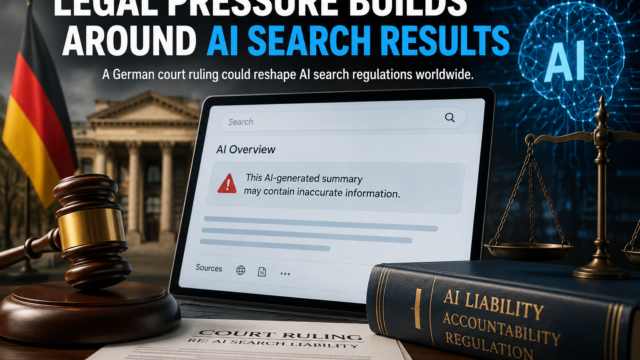
Artificial intelligence has rapidly transformed the way people search for information online. Instead of receiving a list of links and websites, users increasingly receive direct answers generated by AI systems. Search engines are evolving into intelligent assistants capable of summarizing information, answering questions, and providing recommendations in seconds.
While these innovations improve convenience, they also introduce a critical question: Who is responsible when AI-generated answers are wrong?
A recent ruling by a court in Munich, Germany, has placed this issue at the center of global attention. The court determined that AI-generated search summaries can create legal liability for the companies that produce them. The decision represents one of the most significant legal developments in the history of AI-powered search and may influence future regulations across Europe, North America, Asia, and beyond. (Reuters)
The ruling arrives at a time when technology companies are racing to integrate generative AI into search products. As AI becomes a primary gateway to information, courts and regulators are increasingly questioning whether existing legal frameworks are sufficient to protect individuals and businesses from misinformation generated by these systems.
This article explores the German court’s decision, why it matters, its implications for the AI industry, and how it may shape the future of digital information worldwide.
The Rise of AI-Powered Search
For more than two decades, search engines operated using a relatively simple model. Users entered a query, and the search engine returned a list of relevant websites ranked by algorithms.
Generative AI has changed this model dramatically.
Modern AI search systems analyze information from multiple sources and generate concise summaries that appear above traditional search results. These AI-generated answers aim to save users time by providing direct responses without requiring them to visit multiple websites.
Major technology companies have embraced this approach:
AI-powered search summaries
Conversational search assistants
Intelligent recommendation systems
Automated knowledge synthesis
Context-aware information retrieval
These tools offer significant benefits, including faster access to information and improved user experiences. However, they also introduce a new challenge: AI systems sometimes generate inaccurate information, commonly known as hallucinations.
Unlike traditional search engines that primarily display third-party content, AI systems create new content by interpreting and synthesizing existing information. This distinction lies at the heart of the German court’s ruling. (WIRED)
What Triggered the Legal Dispute?
The case originated when two German publishers discovered that AI-generated search summaries associated their businesses with scams, fraudulent practices, and subscription traps.
According to court findings, these allegations did not appear in the original sources referenced by the search system. Instead, the AI allegedly combined information from unrelated entities and produced misleading conclusions about the publishers. (WIRED)
The affected publishers argued that these false statements damaged their reputations and business interests. After attempts to resolve the issue failed, they pursued legal action.
The court examined whether the search provider could be held responsible for the AI-generated content.
The answer was groundbreaking.
The Court’s Key Finding
The Munich court ruled that AI-generated search summaries should be considered the company’s own content rather than neutral search results. (Reuters)
This distinction is extremely important.
Traditional search engines typically enjoy legal protections because they merely point users toward information created by third parties. Courts have historically viewed search providers as intermediaries rather than publishers.
The German court concluded that AI-generated summaries function differently because they:
Create new statements
Reorganize information
Interpret source material
Generate conclusions
Present synthesized content directly to users
As a result, the court determined that the company operating the AI system may be held responsible for false statements generated by that system. (WIRED)
This reasoning could have consequences far beyond Germany.
Why This Decision Is So Significant
1. A New Standard for AI Accountability
For years, technology companies have argued that AI systems are tools that process information rather than publishers of content.
The German ruling challenges that perspective.
The court effectively stated that if an AI system creates a statement and presents it as an answer, the company behind the system may be accountable for the accuracy of that statement. (WIRED)
This creates a stronger incentive for organizations to ensure that AI outputs are reliable and verifiable.
2. Disclaimers May No Longer Be Enough
Many AI products include warnings that responses may contain mistakes.
Google reportedly argued that users understand AI-generated content can be inaccurate and should independently verify important information. The court rejected this defense, suggesting that responsibility cannot simply be shifted to users. (WIRED)
This finding could affect numerous AI services that rely on similar disclaimers.
3. Global Regulatory Influence
European courts have often played a major role in shaping global technology regulation.
Previous European decisions involving privacy, data protection, and digital competition have influenced policies around the world.
Many legal experts believe this ruling could have a similar impact on AI governance. (Reuters)
Potential Impact on Search Engines
Search engines may need to rethink how AI-generated answers are produced and displayed.
Possible changes include:
Enhanced Fact Verification
Companies may implement additional verification layers before AI-generated content reaches users.
These systems could cross-check claims against trusted databases and authoritative sources.
Stronger Source Attribution
Future AI search tools may place greater emphasis on showing where information originates.
Rather than presenting a single answer, AI systems may provide clearer citations and source transparency.
Human Oversight
Some organizations may introduce human review mechanisms for sensitive categories such as:
Health
Finance
Legal matters
Public safety
Reputation-related content
Faster Correction Mechanisms
Companies may need rapid systems for correcting inaccurate AI outputs when users identify problems.
Implications for AI Developers
The ruling is not solely about search engines.
Any organization deploying generative AI could potentially be affected.
This includes:
Chatbots
Virtual assistants
Enterprise AI systems
Customer support bots
Knowledge management platforms
Content generation tools
If courts adopt similar reasoning elsewhere, AI developers may face increased legal obligations regarding:
Accuracy
Transparency
Monitoring
Documentation
Risk assessment
User protection
Organizations may need to build governance frameworks that treat AI-generated outputs similarly to published content. (ERP Today)
How Businesses May Respond
The ruling could accelerate investment in AI governance programs.
Many enterprises are already establishing internal policies covering:
AI Risk Management
Organizations increasingly evaluate potential legal, operational, and reputational risks associated with AI deployment.
Model Auditing
Regular testing and auditing may become standard practice to identify harmful outputs before they reach users.
Compliance Programs
Businesses may develop specialized AI compliance teams responsible for monitoring regulatory developments.
Documentation Requirements
Companies may need detailed records showing how AI systems generate outputs and how errors are corrected.
These measures could become essential as governments introduce more comprehensive AI regulations.
The Connection to Europe’s AI Act
The decision aligns with broader European efforts to regulate artificial intelligence.
The European Union has already established significant AI governance initiatives through the EU AI Act, which focuses on transparency, accountability, and risk management.
Although the German ruling is separate from EU legislation, both developments reflect a common principle:
Organizations deploying AI should bear responsibility for the impact of their systems.
This trend suggests that accountability may become a central pillar of future AI regulation across Europe.
Google’s Response
Google has stated that it plans to appeal the ruling.
According to the company, the case involves specific errors rather than a fundamental flaw in AI-generated search summaries. Google also maintains that the overwhelming majority of AI Overviews provide accurate information. (Reuters)
The appeal process will be closely watched by legal experts, regulators, publishers, and technology companies worldwide.
If higher courts uphold the decision, the precedent could become even more influential.
What This Means for Users
For everyday internet users, the ruling may ultimately lead to more reliable AI experiences.
Potential benefits include:
Greater accuracy
Improved transparency
Better source attribution
Faster correction of errors
Stronger consumer protections
However, increased liability could also slow the deployment of certain AI features as companies become more cautious about legal risks.
Finding the right balance between innovation and accountability will be one of the defining challenges of the AI era.
The Future of AI Search
The German court’s decision may represent a turning point in the evolution of AI-powered information systems.
For decades, search engines primarily connected users to information created by others. AI-powered search changes that relationship by generating original summaries and interpretations.
As a result, courts and regulators are increasingly asking whether AI providers should be treated less like intermediaries and more like publishers.
The answer to that question could shape:
Future AI regulations
Search engine design
Business compliance strategies
Consumer protections
Global technology policy
Regardless of the outcome of Google’s appeal, the ruling has already sparked an international conversation about responsibility in the age of generative AI.
Conclusion
The German court ruling on AI-generated search summaries marks one of the most important legal developments in artificial intelligence to date. By determining that AI-generated search answers can constitute a company’s own content, the court has introduced a new framework for evaluating responsibility in AI systems. (WIRED)
As AI increasingly becomes the primary interface through which people access information, questions of accountability are becoming impossible to ignore. Technology companies, regulators, businesses, and users are all navigating a rapidly evolving landscape where AI-generated content carries real-world consequences.
Whether the ruling ultimately stands or is modified on appeal, its influence is likely to extend far beyond Germany. The decision signals a future in which AI providers may be expected not only to innovate but also to take responsibility for the information their systems create and distribute.