
Artificial intelligence has become one of the most powerful forces shaping the modern global economy. From advanced computer chips and automated customer services to medical research, financial technology and intelligent manufacturing, AI is transforming how businesses operate and how people interact with technology.
Major technology companies are investing enormous amounts of money in AI development, data centres, specialised processors and cloud computing infrastructure. Investors are increasingly viewing artificial intelligence as a major source of future economic growth, while governments are competing to establish leadership in this rapidly expanding industry.
However, behind the excitement surrounding AI innovation lies a complicated economic question: Could the AI boom create financial risks that are larger than businesses and investors currently expect?
The rapid expansion of artificial intelligence offers substantial opportunities, but it also introduces potential challenges involving excessive investment, inflated company valuations, rising energy consumption, employment disruption, market concentration and financial instability.
Companies are spending billions of dollars to develop increasingly powerful AI systems. Yet the commercial returns from these investments remain uncertain in many areas. Businesses must determine whether the productivity improvements generated by AI will justify the enormous infrastructure costs.
At the same time, investors are placing significant expectations on a relatively small group of technology companies. If AI adoption grows more slowly than anticipated, the consequences could extend beyond the technology sector.
The economic risks of the AI boom therefore deserve serious attention. Understanding these challenges is essential for businesses, policymakers, investors, workers and consumers who want to benefit from artificial intelligence without overlooking its potential costs.
🌍 The AI Boom: A New Era of Global Economic Transformation
Artificial intelligence has moved from a specialised technology used mainly by researchers into a major component of the global business environment.
Generative AI applications can produce written content, analyse information, generate computer code, create images and assist with complex professional tasks. Businesses are integrating these capabilities into existing products and services to improve efficiency and develop new revenue opportunities.
The expansion of AI has created demand across several interconnected industries.
- Semiconductor manufacturers are developing advanced processors.
- Cloud computing companies are expanding their infrastructure.
- Data-centre operators are building facilities to support AI workloads.
- Energy companies are exploring ways to meet growing electricity demand.
- Software businesses are incorporating AI into commercial applications.
- Consulting and professional services firms are helping organisations adopt automation.
This expansion has created an investment cycle involving technology companies, infrastructure providers, financial institutions and governments.
Companies such as NVIDIA, Microsoft, Alphabet and Amazon have become important participants in the development of AI infrastructure and services.
The enthusiasm surrounding AI is understandable. Artificial intelligence has the potential to increase productivity, reduce repetitive work, improve research and create entirely new business models.
However, technological progress does not automatically guarantee sustainable economic returns.
The history of innovation shows that important technologies can transform society while still producing periods of excessive investment and financial instability.
The AI boom should therefore be evaluated not only through its technological achievements but also through its economic foundations.
💸 The Risk of an AI Investment Bubble
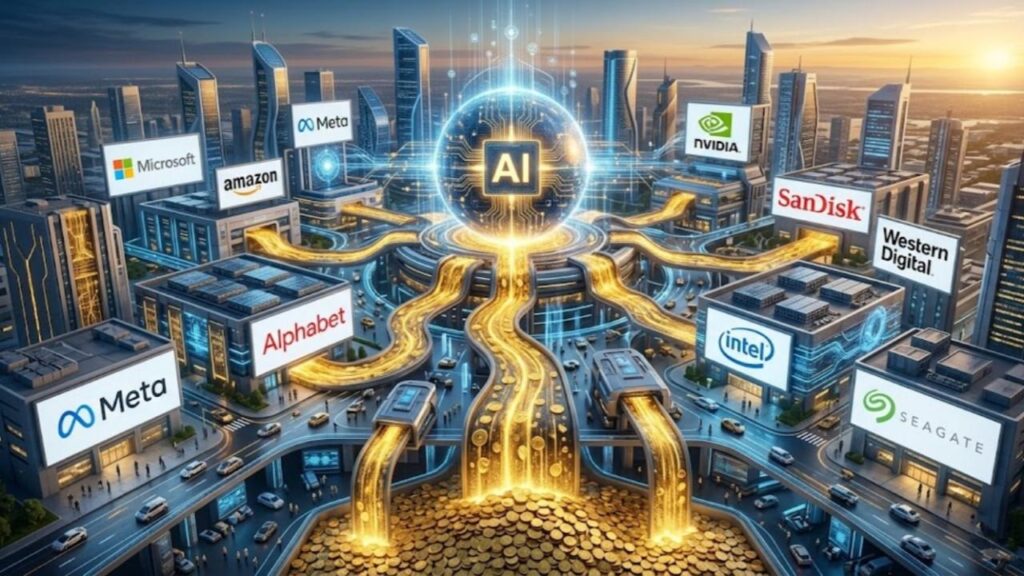
One of the biggest economic concerns surrounding artificial intelligence is the possibility of an investment bubble.
An investment bubble develops when asset prices rise substantially because investors expect future growth that may not be supported by actual business performance.
The AI industry has attracted enormous investment because businesses and financial markets anticipate significant future demand.
Technology companies are building infrastructure today based on expectations that AI services will generate substantial revenue over many years.
However, there is no guarantee that every investment will produce the expected returns.
Some companies may discover that developing and operating AI systems costs more than anticipated. Others may struggle to convert free users into paying customers or persuade businesses to purchase expensive AI services.
This creates a gap between technological potential and commercial profitability.
Why could an AI bubble develop?
Several factors could contribute to excessive investment:
- Investors may overestimate how quickly businesses will adopt AI.
- Company valuations may assume unusually high future earnings.
- Businesses may build more computing capacity than customers actually need.
- Competition could reduce prices and profit margins.
- New AI technologies could make existing infrastructure less valuable.
- Investment decisions may be influenced by fear of missing out rather than realistic financial analysis.
The International Monetary Fund has warned that disappointing earnings or reduced confidence in AI-related investments could trigger a correction in asset prices, with consequences extending beyond technology companies. International Monetary Fund+2
The experience of the dot-com bubble offers a useful historical comparison.
During the late 1990s, investors placed enormous expectations on internet businesses. The internet ultimately transformed the global economy, but many companies failed because their business models could not support their valuations.
Artificial intelligence could follow a different path, but the broader lesson remains relevant: a revolutionary technology does not make every investment successful.
🏦 Rising Debt and the Financial Risks of AI Infrastructure
The AI boom is increasingly becoming a major financing challenge.
Building advanced data centres requires substantial capital expenditure. Companies must purchase land, construct facilities, install specialised cooling systems, acquire computing equipment and secure reliable electricity supplies.
Initially, many technology companies financed these investments through operating cash flows and existing financial resources.
However, the scale of planned development is encouraging greater reliance on external borrowing.
The Bank for International Settlements highlighted this trend in its January 2026 analysis, explaining that AI-related investment is increasingly shifting from cash-flow financing towards debt and private credit. Bank for International Settlements+1
This creates several potential economic risks.
Higher borrowing costs
Companies that borrow large amounts of money must make regular interest payments.
If interest rates rise or lenders become more cautious, refinancing expensive infrastructure projects may become difficult.
Uncertain future earnings
AI companies need sufficient revenue to justify their borrowing.
If demand develops more slowly than expected, businesses could struggle to service their debt.
Infrastructure depreciation
Advanced AI processors and computing equipment can become outdated as technology improves.
Facilities designed around particular hardware configurations may also require expensive upgrades.
Financial market exposure
Banks, bondholders, private credit funds and infrastructure investors may all become exposed to the same AI investment cycle.
If a major AI business experiences financial difficulties, losses could spread through these interconnected relationships.
This risk becomes particularly serious when investors assume that AI infrastructure will generate stable income for many years without fully accounting for technological change.
🔄 Circular Financing: When AI Companies Become Dependent on Each Other
Another emerging concern is the development of circular financing arrangements within the AI industry.
Circular financing occurs when companies invest in, lend to or purchase services from one another in ways that create interconnected financial relationships.
For example, an AI infrastructure provider might invest in an AI model developer.
That developer may then purchase cloud computing capacity from the same infrastructure provider.
The infrastructure provider benefits from the investment relationship while the AI developer receives capital and access to computing resources.
These arrangements are not automatically harmful. Strategic partnerships and long-term commercial agreements are common in technology industries.
However, excessive dependence on a small number of interconnected companies can create financial vulnerabilities.
If one important participant experiences a serious problem, several other companies may face reduced revenue, lower valuations or difficulties meeting their financial obligations.
The IMF’s October 2026 analysis highlighted the scale of some AI financing relationships. Its review of 14 transactions since 2023 identified approximately $300 billion in equity investments and $650 billion in debt associated with $1.4 trillion in future revenue commitments. International Monetary Fund+1
These figures illustrate why financial regulators are paying greater attention to the structure of AI investment.
The concern is not simply how much money is entering the industry.
It is also about where the money comes from, how financial obligations are distributed and whether expected revenue depends on the continued success of a limited group of companies.
Greater transparency in AI financing could help investors understand the risks before problems emerge.
📉 Stock Market Concentration: Too Much Dependence on a Few Technology Companies
The AI boom has contributed to the growing influence of a relatively small number of large technology companies in global equity markets.
These businesses are important because they control key parts of the AI ecosystem, including cloud infrastructure, semiconductor development, software platforms and advanced computing services.
Their strong financial performance has helped support investor confidence in the broader technology sector.
However, excessive market concentration can create risks.
When a small group of companies accounts for a substantial share of market performance, problems affecting those companies can influence entire stock indices.
Consider a situation in which investors suddenly become concerned about AI profitability.
They may reduce exposure to semiconductor manufacturers, cloud computing businesses and technology companies simultaneously.
Even businesses with strong financial positions could experience share-price declines because of broader market sentiment.
The IMF has identified the possibility that a correction in AI-related valuations could spread through financial markets because of the sector’s growing importance and interconnected investment structures. International Monetary Fund+1
Market concentration also creates challenges for pension funds and other institutional investors.
Many investment portfolios hold large technology companies through broad market indices.
As a result, investors who believe they have diversified exposure may still have substantial indirect dependence on the AI industry.
This does not mean that technology stocks should be avoided.
It means that investors need to understand how concentrated their portfolios have become and whether current valuations reflect realistic earnings expectations.
⚡ The Energy Crisis: AI Data Centres Require Enormous Electricity
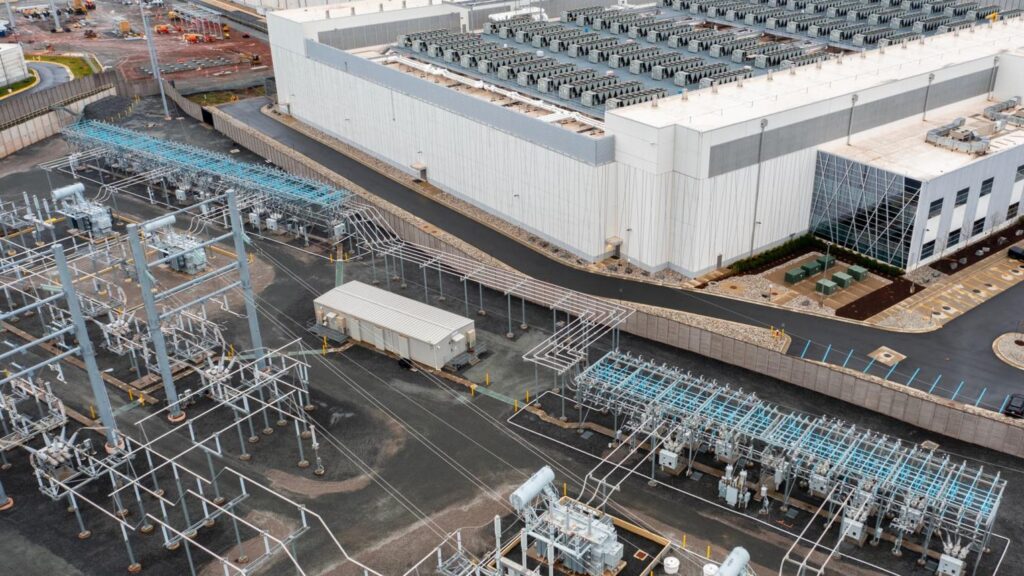
One of the most important physical limitations of the AI boom is electricity.
Artificial intelligence systems require computing infrastructure that consumes substantial amounts of energy.
Training large AI models involves processing enormous quantities of information through specialised processors.
Running AI applications also requires continuous computing resources, particularly when millions of users access services simultaneously.
As AI adoption expands, demand for data-centre capacity is increasing.
The International Energy Agency has highlighted the extraordinary investment associated with this development.
According to its 2026 report, major data-centre operators are expected to spend more than $700 billion in capital expenditure during 2026, with much of the investment directed towards new facilities. IEA+1
This expansion creates several economic challenges.
Electricity prices
Large data centres can increase demand for electricity in regions where power infrastructure is already under pressure.
Grid investment
Utilities may need to build new transmission lines, upgrade substations and expand generation capacity.
Energy security
Countries must ensure that growing digital infrastructure does not undermine the reliability of electricity supplies for households and traditional industries.
Environmental costs
If additional electricity is generated using fossil fuels, AI expansion could increase carbon emissions.
Water consumption
Some data centres require significant water resources for cooling, creating potential pressure in water-stressed regions.
The challenge is to ensure that AI infrastructure development is supported by reliable, affordable and sustainable energy.
Without appropriate planning, the economic benefits of AI could be accompanied by higher infrastructure costs and environmental pressures.
🌱 Environmental Risks: Can the AI Industry Grow Sustainably?
The environmental consequences of artificial intelligence extend beyond electricity consumption.
Modern AI infrastructure requires physical resources, including land, metals, semiconductor materials, cooling equipment and construction materials.
Producing advanced chips involves complex manufacturing processes and extensive supply chains.
Data centres also generate heat, which must be managed through specialised cooling systems.
As infrastructure expands, governments and communities may face difficult decisions about how much land and energy should be allocated to digital development.
There are several important environmental considerations.
Carbon emissions
The climate impact of AI depends partly on the electricity sources used by data centres.
Facilities powered by renewable energy may have a different environmental footprint from those relying heavily on fossil fuels.
Water resources
Cooling systems can create additional water demand, particularly in regions where water availability is already limited.
Electronic waste
Rapid hardware replacement could increase the volume of discarded servers, processors and other electronic equipment.
Natural resources
The manufacturing of advanced computing equipment depends on specialised materials and global supply chains.
However, AI can also contribute positively to environmental protection.
It can improve energy forecasting, support smart electricity grids, optimise transport systems and help researchers develop more efficient industrial processes.
The objective should not be to stop AI development.
Instead, governments and businesses should encourage energy-efficient models, responsible hardware recycling, transparent environmental reporting and sustainable infrastructure planning.
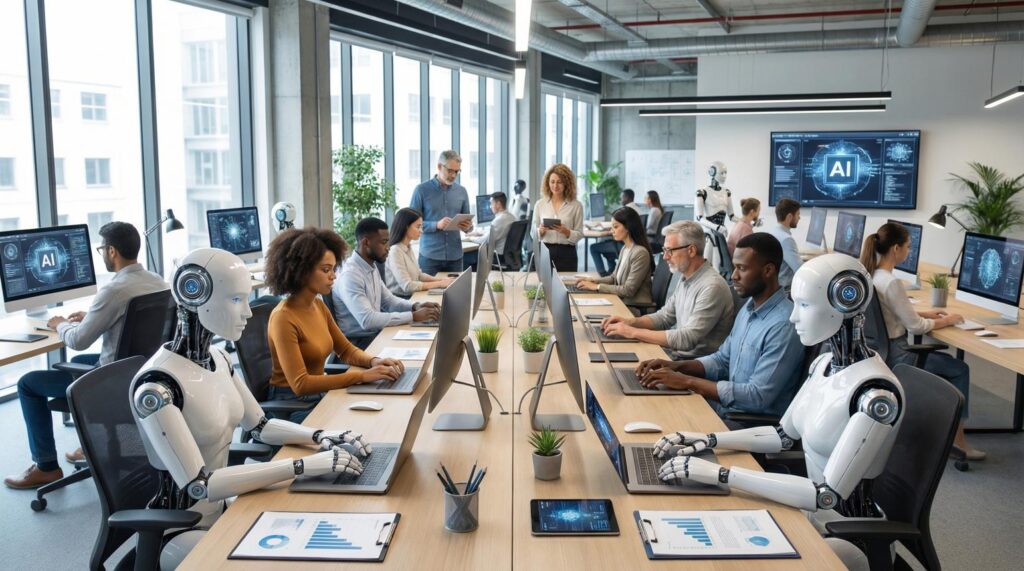
👩💻 Employment Disruption: Will Artificial Intelligence Replace Human Workers?

One of the most widely discussed economic risks of artificial intelligence is its impact on employment.
AI systems can perform tasks that previously required significant human effort.
They can draft documents, analyse data, generate software code, answer customer questions, translate languages and assist with administrative activities.
As these capabilities improve, some businesses may reduce their demand for certain types of labour.
However, the economic impact will not be identical across all occupations.
Some jobs involve repetitive digital activities that are relatively easy to automate.
Others require physical skills, interpersonal communication, professional judgement or complex decision-making.
Industries facing potential disruption
- Customer support and call centres.
- Basic content production and editing.
- Administrative and data-processing services.
- Certain accounting and financial tasks.
- Software development and testing.
- Routine legal and research support.
- Some marketing and digital design activities.
The effects may include reduced hiring, changes in salary structures and increased pressure on workers to develop new skills.
However, AI can also create employment opportunities.
Businesses will need AI engineers, cybersecurity professionals, data specialists, infrastructure technicians, compliance experts and professionals who can integrate AI into existing operations.
The central economic challenge is the transition between declining demand for some skills and increasing demand for others.
If workers cannot adapt quickly enough, unemployment and income inequality could increase.
The IMF has emphasised that AI adoption may affect workers unevenly, with some middle-skilled occupations particularly exposed to automation. International Monetary Fund+1
📚 The Growing Skills Gap: Why Education Must Adapt to AI
The economic benefits of artificial intelligence will depend partly on whether workers have the skills needed to use it effectively.
Technology is developing faster than many traditional education and training systems can adapt.
Students may graduate with qualifications that do not fully prepare them for workplaces where AI-assisted tools are becoming common.
Similarly, experienced employees may discover that their existing professional skills need to be updated.
This creates a growing skills gap.
Digital literacy
Workers need to understand how AI systems operate, where they are useful and where their limitations become important.
Critical thinking
AI-generated information should be evaluated rather than accepted automatically.
Technical knowledge
Programming, data analysis, cybersecurity and cloud computing skills may become increasingly valuable.
Communication and creativity
Human abilities such as negotiation, leadership, collaboration and creative problem-solving remain important in many professional environments.
Continuous learning
Workers may need to update their knowledge regularly as AI tools and business requirements change.
Educational institutions should therefore integrate practical AI literacy into their programmes.
Businesses also have a responsibility to provide training rather than expecting employees to manage technological disruption independently.
Governments can support workers through reskilling programmes, vocational education and accessible digital learning opportunities.
The goal should be to make AI a tool that improves human productivity instead of creating an economic divide between people who can use advanced technology and those who cannot.
📊 Productivity Expectations: Will AI Deliver the Economic Growth Businesses Promise?
One of the strongest arguments supporting AI investment is its potential to increase productivity.
Productivity measures how efficiently an economy produces goods and services using available resources.
If AI helps businesses complete tasks faster, reduce operational expenses and improve decision-making, it could contribute to higher economic output.
For example, an AI system may help a company analyse customer information in minutes rather than requiring employees to spend several hours reviewing documents.
In manufacturing, AI can support predictive maintenance and improve production planning.
In healthcare, it can assist with medical research and administrative workflows.
In agriculture, AI-powered systems can support crop monitoring and resource management.
However, productivity improvements do not always appear immediately.
Businesses must integrate new technologies into existing operations, train employees, update systems and establish appropriate security procedures.
Some AI applications may require expensive subscriptions and infrastructure investments without generating enough additional revenue.
The IMF has noted that AI could potentially increase global economic growth by around half a percentage point annually over the next decade, depending on successful adoption and productivity improvements. International Monetary Fund+1
This is an important opportunity, but it should not be treated as a guaranteed outcome.
The economic value of AI will depend on how effectively businesses transform technological capabilities into measurable improvements.
A company that purchases advanced AI software without changing its business processes may achieve limited benefits.
Successful adoption requires more than buying technology. It requires organisational planning, employee participation and realistic assessments of financial returns.
🏢 Small Businesses Could Struggle to Compete with Large AI Companies
Artificial intelligence could create a new competitive divide between large corporations and smaller businesses.
Major technology companies have substantial financial resources, computing infrastructure and access to specialised researchers.
They can invest billions in developing proprietary AI models and data-centre networks.
Smaller businesses usually operate with more limited budgets.
Although cloud-based AI tools make advanced technology more accessible, the costs of subscriptions, integration, cybersecurity and employee training can still create difficulties.
Several economic risks deserve attention.
Unequal access to computing resources
Large organisations may receive better pricing and access to advanced computing infrastructure.
Dependence on major platforms
Small businesses may become dependent on a limited number of AI providers.
Competitive pressure
Businesses that cannot adopt AI effectively may struggle to compete with companies that automate important operations.
Data disadvantages
Large companies often have access to extensive customer and operational data, giving them advantages in developing specialised AI applications.
Rising operating costs
Businesses may need to purchase several AI services to support different functions.
However, AI also creates opportunities for small businesses.
Entrepreneurs can use AI tools for customer support, marketing, translation, bookkeeping and product development without building expensive systems themselves.
The important policy objective is to encourage fair access to useful technology.
Affordable digital infrastructure, training and competition can help smaller businesses participate in the AI economy.
🔐 Cybersecurity and Financial Risks in an AI-Driven Economy
As businesses become more dependent on AI systems, cybersecurity becomes increasingly important.
Artificial intelligence can help security professionals detect suspicious activity, identify software vulnerabilities and respond to cyberattacks.
Unfortunately, the same technology can also help malicious actors develop more convincing phishing messages, automate attacks and analyse stolen information.
This creates a complicated security environment.
Financial institutions are particularly exposed because they depend on digital systems for payments, trading, customer accounts and sensitive financial information.
A major cyberattack affecting a cloud provider or financial technology platform could disrupt several connected businesses simultaneously.
The IMF has highlighted cyberattacks as one of the growing risks facing global financial markets, particularly as financial services become more interconnected. International Monetary Fund+1
Businesses should therefore consider cybersecurity an essential part of AI investment.
Important safeguards include:
- Regular security assessments.
- Strong access controls.
- Encryption of sensitive information.
- Employee cybersecurity training.
- Independent testing of AI applications.
- Reliable backup and recovery systems.
- Clear procedures for reporting security incidents.
AI adoption without appropriate security planning could create economic costs that outweigh the productivity benefits.
🌐 Global Inequality: Will Every Country Benefit from the AI Boom?

Artificial intelligence has the potential to transform economies across the world, but its benefits may not be distributed equally.
Countries with strong technology industries, reliable electricity networks, skilled workforces and substantial research funding are generally better positioned to benefit from AI investment.
Advanced economies already have many of the institutions and infrastructure required to develop and deploy sophisticated AI systems.
Developing countries may face greater barriers.
These include limited computing resources, expensive internet access, insufficient digital skills and a shortage of specialised research facilities.
The resulting imbalance could create a wider technology divide.
Developed economies
Countries with established technology companies may capture a significant share of AI-related profits and intellectual property.
Developing economies
Countries with limited digital infrastructure may become dependent on foreign AI platforms.
Emerging technology hubs
Nations investing in education, data infrastructure and research can create new opportunities for local businesses.
International trade
The global semiconductor and computing supply chains could become increasingly important to economic competitiveness.
India offers an interesting example.
Its large technology workforce, expanding digital infrastructure and growing startup ecosystem create opportunities to participate in the global AI economy.
However, the country also needs to invest in research, affordable computing, education and responsible AI deployment.
For developing economies, the objective should be to become active participants in AI innovation rather than remaining only consumers of technologies developed elsewhere.
🇮🇳 India’s Economic Opportunities and Risks in the AI Boom
India is positioned to benefit from artificial intelligence through its information technology industry, digital services, engineering workforce and expanding startup ecosystem.
AI could improve productivity in several important sectors.
Information technology: AI-assisted development tools can help software companies improve coding, testing and maintenance.
Healthcare: AI applications can support medical imaging, administrative efficiency and research.
Agriculture: Intelligent monitoring systems can help farmers make better decisions about irrigation, weather and crop management.
Education: Personalised learning tools can make educational resources more accessible.
Manufacturing: AI-based quality control and predictive maintenance can improve industrial efficiency.
Financial services: Automation can support fraud detection, customer assistance and risk analysis.
However, India also faces important challenges.
Employment disruption could affect workers in routine information technology and business-process services.
Smaller companies may struggle to afford advanced infrastructure.
Dependence on foreign AI models and semiconductor supply chains could create strategic vulnerabilities.
Growing data-centre investment may also increase pressure on electricity networks, water resources and urban infrastructure.
India therefore needs a balanced approach that supports innovation while protecting workers, encouraging competition and strengthening digital infrastructure.
Investment in education and research will be particularly important.
The country’s long-term success will depend on developing domestic capabilities and ensuring that AI-driven productivity gains reach businesses and households across different income groups.
⚖️ Monopoly Power and the Risk of an AI-Controlled Economy
Another economic concern involves the concentration of power within the AI industry.
Developing advanced AI systems requires significant financial resources, specialised hardware, large datasets and highly skilled employees.
These requirements create barriers to entry for new companies.
As a result, a relatively small number of organisations may gain considerable influence over the infrastructure used by millions of businesses and consumers.
This concentration can create several problems.
Higher prices
Dominant providers may have greater freedom to increase subscription and computing costs.
Reduced competition
Smaller AI developers may struggle to compete with companies controlling important infrastructure.
Vendor dependence
Businesses may become locked into particular cloud or AI platforms.
Limited consumer choice
Concentration could reduce the number of independent services available to customers.
Innovation risks
Smaller companies may find it difficult to commercialise new ideas without access to expensive infrastructure.
Competition policy will therefore become increasingly important.
Governments may need to examine mergers, exclusive commercial agreements, cloud pricing and access to essential technology infrastructure.
At the same time, regulation should avoid creating unnecessary barriers that prevent new businesses from entering the market.
The objective should be a competitive AI ecosystem where innovation can develop without allowing excessive market power to undermine economic opportunity.
🏛️ Why Governments Need Better Economic Policies for AI
Governments have an important responsibility to manage the economic transition created by artificial intelligence.
The technology is developing across national borders, and its effects extend into employment, finance, infrastructure, education and international trade.
Traditional economic policies may need to adapt to these developments.
Several areas deserve particular attention.
Financial regulation
Regulators should monitor borrowing, investment concentration and financial relationships within the AI industry.
Competition policy
Authorities should encourage fair competition and examine practices that restrict market access.
Workforce protection
Governments should support workers affected by automation through education, retraining and employment assistance.
Infrastructure planning
Electricity, water and digital networks must be developed in ways that support economic growth without placing excessive pressure on communities.
Data protection
AI systems should operate within clear rules governing privacy, security and responsible data use.
International cooperation
Countries should collaborate on AI safety, cybersecurity and cross-border financial risks.
The OECD’s September 2026 economic outlook identifies several concerns, including uncertain investment returns, electricity and semiconductor bottlenecks, rising leverage and potential financial market repricing. OECD+1
These warnings demonstrate why policymakers should not treat AI exclusively as a technology development issue.
It is also an important economic and financial stability issue.
🔮 What Happens If the AI Boom Suddenly Slows Down?
One of the most important questions facing the global economy is what could happen if AI investment grows more slowly than expected.
Imagine a situation where technology companies discover that customers are unwilling to pay enough for advanced AI services.
Businesses might reduce their infrastructure spending, delay data-centre projects and reconsider expensive technology partnerships.
The consequences could spread across multiple industries.
Technology companies: Semiconductor manufacturers and cloud providers could experience weaker demand.
Construction businesses: Companies building data centres could face cancelled projects and reduced contracts.
Financial institutions: Lenders and private credit investors could experience losses on AI-related loans.
Stock markets: Technology valuations could decline as investors reassess future earnings.
Employment: Businesses might reduce hiring or postpone expansion plans.
Government revenue: Slower corporate growth could affect tax collections and public investment.
The IMF has warned that a severe correction in AI-related investments could spread through interconnected financial relationships and affect markets beyond the technology sector. International Monetary Fund+2
However, a slowdown in investment would not necessarily mean the end of artificial intelligence.
The technology could continue developing even if some companies fail, valuations decline or infrastructure investment becomes more selective.
This distinction is important.
The long-term economic value of AI should be separated from the short-term financial performance of businesses participating in the boom.
📈 How Businesses Can Manage the Economic Risks of AI
Companies adopting artificial intelligence need to balance innovation with financial responsibility.
Investing in new technology can improve efficiency, but excessive spending without measurable business benefits can create unnecessary financial pressure.
Businesses should develop realistic AI adoption strategies.
Evaluate return on investment
Companies should examine whether AI tools produce measurable improvements in revenue, productivity or customer satisfaction.
Avoid excessive borrowing
Businesses should carefully evaluate their ability to repay loans used to finance technology infrastructure.
Diversify technology providers
Dependence on a single AI provider can create operational and financial risks.
Invest in employee training
Employees should receive opportunities to develop skills that complement AI systems.
Protect sensitive information
Cybersecurity and data governance should be integrated into AI deployment plans.
Monitor technology changes
Businesses should regularly evaluate whether existing infrastructure and software remain suitable as AI capabilities evolve.
A responsible approach can help organisations benefit from technological progress without exposing themselves to unnecessary economic risks.
🌟 The Positive Side: Why the AI Boom Should Not Be Ignored
Although economic risks deserve attention, artificial intelligence also offers extraordinary opportunities.
It would be incorrect to evaluate the AI boom only through the possibility of financial instability.
The technology could create meaningful improvements across different sectors.
Healthcare innovation
AI can assist researchers in analysing medical information, studying diseases and developing new diagnostic approaches.
Scientific discovery
Advanced computing systems can help researchers examine complex scientific problems and accelerate certain research processes.
Education accessibility
AI-powered learning platforms can provide personalised educational assistance and support students with different learning requirements.
Industrial productivity
Manufacturers can use AI to improve production planning, monitor equipment and reduce operational inefficiencies.
Agricultural development
AI can support weather analysis, crop monitoring and more efficient resource management.
Business innovation
Entrepreneurs can develop new products and services using AI tools that were previously available only to large organisations.
These opportunities demonstrate why artificial intelligence remains an important long-term economic development.
The challenge is to ensure that the investment supporting AI growth is sustainable and that its benefits are widely distributed.
A balanced economic approach should encourage innovation while preparing for possible financial, environmental and employment disruptions.
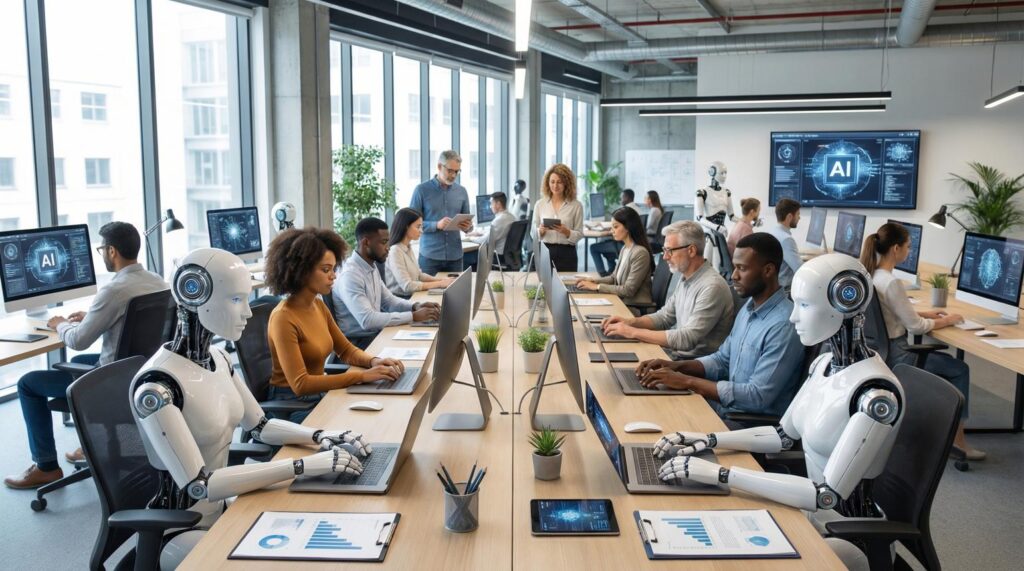
🧭 The Future of the AI Economy: Five Priorities for Sustainable Growth
The future of artificial intelligence will depend on decisions made by businesses, governments, investors and educational institutions.
Five priorities could help create a healthier AI economy.
Responsible financial investment
AI companies should maintain realistic financial projections and avoid excessive debt.
Education and workforce development
Workers and students need accessible opportunities to develop AI-related skills.
Sustainable energy infrastructure
Data-centre expansion should be supported by reliable and environmentally responsible electricity systems.
Strong cybersecurity and governance
Businesses should protect customer information and establish appropriate safeguards for AI systems.
Fair competition and inclusion
Policymakers should encourage innovation while preventing excessive market concentration and unequal access.
These priorities can help ensure that AI development contributes to lasting economic progress rather than a temporary investment boom.
Conclusion: The AI Boom Offers Huge Opportunities but Requires Economic Caution
Artificial intelligence is transforming the global economy at an extraordinary speed. Its potential to improve productivity, accelerate research, create new industries and change traditional business models is attracting unprecedented attention from investors and governments.
However, the economic risks of the AI boom cannot be ignored.
Excessive investment, high company valuations, rising corporate debt, circular financing, market concentration, employment disruption and increasing energy requirements could create serious challenges.
A sudden decline in AI investment could also affect businesses, financial institutions and workers far beyond the technology industry.
For developing economies such as India, the challenge is to capture the benefits of artificial intelligence while managing its effects on employment, infrastructure and economic inequality.
The future will not be determined simply by which company develops the most powerful AI model.
It will depend on which businesses use technology responsibly, which governments establish effective policies and which economies successfully prepare their populations for technological change.
Artificial intelligence should be treated as an important tool for economic development rather than a guarantee of unlimited financial returns.