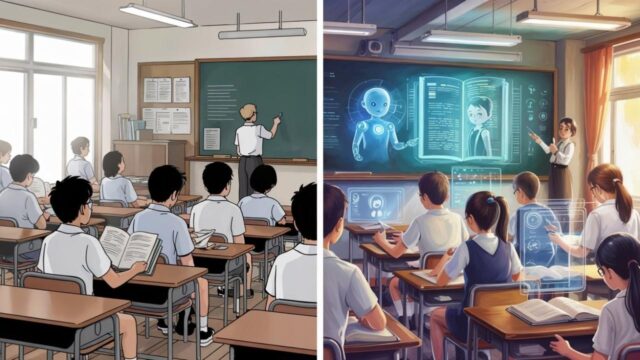
Category: Education · Artificial Intelligence · Digital Learning · Educational Psychology
Central question: Can artificial intelligence teach students more effectively than human teachers, or does the best learning experience come from combining AI-powered tutoring with human guidance?
Introduction: The Future of Learning Is Becoming a Partnership Between Humans and AI
Artificial intelligence is transforming education. Students can now use AI-powered tutors to ask questions, receive instant explanations, solve mathematical problems, practise languages, and obtain personalized feedback. Unlike traditional classroom instruction, AI tutoring systems can respond to individual learning needs and provide support whenever students need it.
At the same time, human teachers continue to play an essential role in education. They understand students’ emotions, encourage curiosity, manage classrooms, recognize learning difficulties, and develop communication and critical-thinking skills through personal interaction.
This raises an important question: Are AI tutors better than human teachers at improving student learning outcomes?
The answer is not simply that one is better than the other. AI and human teachers offer different strengths, and their effectiveness depends on the subject, teaching method, student age, learning environment, and educational objectives.
What Are AI Tutors and Human Teachers?
Understanding AI-powered tutoring
AI tutors are digital learning systems that use artificial intelligence, machine learning, natural language processing, and adaptive learning technologies to support students.
They can function like virtual teaching assistants by responding to questions, identifying mistakes, explaining difficult concepts, and recommending additional exercises.
For example, a mathematics student struggling with quadratic equations can ask an AI tutor to explain the formula, demonstrate a solution, and generate similar problems for practice.
Some AI tutoring systems can also adjust their explanations according to a student’s performance. If a learner repeatedly makes mistakes, the system can provide simpler examples, additional hints, or alternative explanations.
Common applications include:
- Personalized mathematics tutoring.
- Language learning and grammar practice.
- Science explanations and problem-solving.
- Coding and computer programming assistance.
- Practice examinations and quizzes.
- Automated feedback on assignments.
- Individualized revision plans.
Understanding human-led teaching
Human teachers provide a different kind of educational experience. They combine subject knowledge with communication, experience, emotional understanding, and classroom management.
A teacher can recognize when a student is confused, even when the student does not ask a question. They can change their teaching strategy, encourage participation, organize group activities, and help students develop confidence.
Human teaching also involves social and emotional development. Students learn how to communicate, cooperate, resolve disagreements, respect different perspectives, and work with others.
What Does Recent Research Reveal About AI Tutors and Learning?
Research published during 2026 provides an interesting picture. Some experiments demonstrate that AI tutoring can improve learning, while others show that access to AI does not automatically produce better academic performance.
Importantly, these studies do not all compare AI directly with a human teacher. Some compare AI-assisted learning with conventional instruction, while others examine AI-generated feedback or the effects of adding an AI tutor to an existing course.
A meta-analysis of 35 experimental studies
A study published in Humanities and Social Sciences Communications on March 26, 2026, examined the effects of ChatGPT on student learning outcomes.
Researchers analysed 35 experimental studies involving 4,193 participants.
The findings indicated a moderately positive overall effect on learning outcomes, with an effect size of Hedges’ g = 0.670.
The researchers also found that subject area, experimental duration, and instructional approach influenced the results.
This suggests that AI can support learning when it is incorporated into an appropriate educational strategy. However, the findings should not be interpreted as proof that AI tutors outperform qualified human teachers in every subject or educational setting. Nature
Harvard experiment: AI tutoring and traditional classroom learning
An experiment involving 194 undergraduate students at Harvard attracted attention in September 2026.
The research compared a specially designed AI tutor with an active-learning classroom approach in physics education.
Reports described students learning more than twice as much during the AI-tutoring condition compared with the classroom condition.
This finding highlights the potential of personalized, interactive tutoring, particularly when students can ask questions and receive explanations at their own pace.
However, it is important to consider the experimental setting. A controlled tutoring session is not equivalent to replacing an entire university education or comparing AI with every aspect of experienced human teaching.
A two-year school experiment with Khanmigo
A particularly important study appeared in August 2026 through the National Bureau of Economic Research.
Researchers examined AI tutoring through Khan Academy’s Khanmigo in a two-year randomized trial involving 18 middle schools in Tennessee.
The AI tutor was designed to coach students rather than simply provide answers during mathematics practice.
The study reported an improvement of approximately 1.3 national percentile ranks per term, equivalent to around 0.06–0.08 standard deviations over a school year.
However, the findings also revealed an important limitation: students did not engage deeply with the AI tutor consistently.
Although 96% of assigned students tried Khanmigo at least once, the median student interacted with it on only about one-third of their practice days.
Researchers suggested that student engagement was an important barrier to achieving stronger learning improvements.
Interestingly, the gains were similar to those achieved through Khan Academy practice without AI assistance. This means the study does not establish that the AI component itself was responsible for the improvement. SCALE Initiative
A university trial raises concerns about AI dependence
Not all findings are positive.
An October 2026 randomized university trial published as an IZA discussion paper examined course-integrated generative AI tutoring among 2,379 undergraduate students and 30 instructors.
The researchers reported that access to the AI tutor was associated with:
- A reduction of 0.37 standard deviations in final grades.
- A reduction of 0.90 standard deviations in learning-management-system participation.
The results suggest that poorly integrated AI tutoring may displace participation in existing learning activities rather than improve academic performance.
The findings also indicated greater estimated academic losses among first-generation students.
This is an important warning: giving students access to an AI tutor does not necessarily mean they will learn more effectively. How the technology is introduced and used matters considerably. IZA – Institute of Labor Economics
AI feedback versus human feedback: What does the evidence say?
A 2026 meta-analysis published in Educational Psychology examined 41 studies involving 4,813 students.
Researchers compared AI-generated feedback with feedback provided by humans.
The pooled results did not reveal a statistically significant difference in learning performance between the two approaches.
The reported Hedges’ g was 0.25, with a confidence interval ranging from -0.11 to 0.60.
This suggests that AI-generated feedback can be a useful alternative in certain learning situations, but the evidence does not establish that AI feedback is consistently superior to human feedback. ERIC
AI Tutors vs Human Teachers: A Comparison of Learning Outcomes
Both approaches can support academic development, but they differ in how they deliver instruction, feedback, motivation, and student support.
| Learning factor | AI tutors | Human teachers |
|---|---|---|
| Personalized learning | Adapts explanations and practice | Adapts teaching through observation and experience |
| Feedback | Often immediate and automated | Contextual and individually interpreted |
| Availability | Can provide support outside classroom hours | Usually limited by schedules |
| Emotional support | Limited understanding of real emotions | Can provide empathy and encouragement |
| Critical thinking | Can encourage reasoning through guided questions | Can challenge assumptions through discussion |
| Social learning | Limited without group activities | Encourages collaboration and communication |
| Assessment | Can automate quizzes and identify patterns | Can evaluate deeper understanding and context |
| Learning motivation | Interactive features may increase interest | Relationships and encouragement can sustain motivation |
| Accuracy | Can generate incorrect explanations | Also vulnerable to human mistakes |
| Classroom management | Limited | Can manage classroom dynamics |
The comparison demonstrates that AI and human teachers have complementary strengths. Neither approach is automatically effective without good instructional design.
Why AI Tutors Can Improve Student Learning
Personalized learning experiences
One of the biggest advantages of AI tutoring is personalization.
In traditional classrooms, teachers often work with many students who have different learning speeds, academic backgrounds, and levels of understanding.
It can be difficult to provide individual attention to everyone during a single lesson.
AI tutors can offer additional explanations and practice based on individual responses.
For example, imagine three students studying the same mathematics topic.
The first student understands the concept quickly but needs advanced problems. The second understands the formula but struggles with calculations. The third does not understand the basic concept.
An AI tutor can provide different learning activities to each student.
This approach can make learning more flexible and help students work on their individual weaknesses.
Immediate feedback and error correction
Feedback is an important part of effective learning.
When students solve a mathematics problem incorrectly, waiting several days for an explanation may interrupt their learning process.
An AI tutor can identify an error and provide immediate guidance.
For example, it can explain why a student made a mistake while solving a differential equation or applying a statistical formula.
However, feedback should encourage students to understand their mistakes rather than simply copy the correct solution.
Learning without fear of embarrassment
Some students hesitate to ask questions in classrooms because they worry about making mistakes in front of their classmates.
AI tutoring can provide a less intimidating environment for practising difficult concepts.
Students can ask the same question repeatedly, request simpler explanations, and practise at their own pace.
This can be particularly helpful for students who need additional academic support.
Flexible learning outside classroom hours
AI tutors can provide educational assistance beyond regular school and college hours.
Students can revise lessons at home, prepare for examinations, and practise questions whenever they have access to the necessary technology.
This flexibility may be valuable for learners who cannot afford private tutoring or who live far from educational institutions.
Why Human Teachers Remain Essential
Despite the growing capabilities of artificial intelligence, human teachers continue to provide important educational benefits that automated systems cannot fully reproduce.
Emotional intelligence and personal relationships
Education is not only about remembering information or achieving high examination scores. It also involves developing confidence, curiosity, discipline, and emotional resilience.
Human teachers can recognize when students are anxious, frustrated, discouraged, or losing interest.
For example, a student who repeatedly performs poorly in mathematics may not simply need another explanation. They may need encouragement, a different teaching approach, or help overcoming a fear of mathematics.
A human teacher can respond to these circumstances through personal interaction and experience.
Developing critical thinking and independent reasoning
Students need more than correct answers. They must learn how to analyse information, question assumptions, evaluate evidence, and develop independent conclusions.
Human teachers can organize debates, discussions, research activities, and classroom experiments that encourage students to examine different perspectives.
AI can also support these activities by asking questions and presenting alternative arguments. However, students still need educators who can assess the quality of their reasoning and guide meaningful intellectual discussions.
Social interaction and collaborative learning
Schools and universities are important environments for developing social skills.
Students learn through group projects, classroom discussions, presentations, teamwork, and communication with classmates.
These activities help them understand different viewpoints and develop interpersonal skills.
AI tutoring generally focuses on individual interactions. Without carefully designed collaborative activities, excessive dependence on AI could reduce opportunities for students to communicate and learn from one another.
Recognizing individual learning difficulties
A student may struggle with a subject because of weak foundational knowledge, language difficulties, low confidence, distractions, or personal circumstances.
A human teacher can observe behaviour and classroom participation to identify possible problems.
Although AI systems can analyse academic performance and identify patterns in incorrect answers, they may not understand the complete circumstances behind a student’s difficulties.
Teachers can combine assessment results with personal observation to determine what kind of support is needed.
What Happens When AI Tutors and Human Teachers Work Together?
Promising approach
An increasingly important direction in education is the hybrid learning model, which combines AI-powered tutoring with human instruction.
Instead of asking whether AI should replace teachers, educators can explore how technology can help teachers provide more effective instruction.
In this model, AI handles certain repetitive and personalized learning tasks, while teachers focus on explanation, mentorship, classroom interaction, and deeper learning.
How a hybrid learning system works
Consider a mathematics lesson about quadratic equations.
Before the lesson: The teacher uses an AI tool to prepare practice questions, identify common misconceptions, and create different levels of exercises.
During the lesson: The teacher introduces the concept, explains important mathematical principles, and encourages students to solve problems together.
After the lesson: Students use an AI tutor to practise additional questions, receive hints, and identify mistakes.
Teacher review: The teacher examines student progress and provides additional explanations to those who need support.
This approach combines individualized practice with human supervision.
Evidence supporting the hybrid approach
A June 2026 working paper from Brown University’s Annenberg Institute examined AI literacy tutoring in two randomized controlled trials involving elementary students.
Researchers found that adding in-person human support focused on engagement increased average weekly AI-platform usage by approximately 1–4 minutes and engagement by 71–80%.
However, reading achievement did not improve in the intervention.
This finding is particularly important because it demonstrates that human support can increase participation without automatically producing measurable academic improvements. Engagement and learning outcomes must be evaluated separately. ERIC
Another example comes from Google’s October 29, 2026 report on education studies in the UK and Italy.
In a 10-week randomized trial involving more than 1,100 students aged 12–15, researchers compared AI tutoring, human tutoring, and static hints during mathematics learning.
Students receiving AI tutoring performed similarly to those receiving human tutoring on platform tasks and intermediate quizzes.
However, the improvement did not appear in standardized STAR test scores during the same period.
The report also described a yearlong study across 31 Italian schools involving more than 1,600 teachers. Teachers using AI to help design lessons reported greater student participation and more collaborative learning activities.
These findings are encouraging, but the UK results included real-time human expert review of AI responses, and the Italian findings included teacher-reported measures. They should not be interpreted as proof that unsupervised AI can replace teachers. blog.google
The Risks and Limitations of AI-Based Education
Although AI tutoring offers opportunities, introducing it into education without appropriate safeguards can create new problems.
Incorrect information and misleading explanations
AI systems can sometimes generate inaccurate information, incorrect calculations, or explanations that appear convincing but contain mistakes.
This can be particularly problematic in subjects such as mathematics, science, medicine, and history.
Students who lack sufficient subject knowledge may struggle to identify these errors.
Teachers therefore need to verify important educational content and help students develop the ability to evaluate AI-generated information.
Excessive dependence on artificial intelligence
One major concern is that students may become dependent on AI-generated answers.
Instead of attempting to solve a problem independently, they may immediately ask an AI system to complete it.
This can reduce opportunities to practise independent reasoning, problem-solving, and analytical thinking.
For example, a student preparing for a mathematics examination should first attempt a problem independently. AI assistance should come afterward, particularly when the student cannot identify the next step.
Data privacy and student safety
AI educational platforms may process personal information, learning histories, examination results, and student interactions.
Educational institutions must understand how this information is collected, stored, processed, and protected.
Schools should choose platforms with appropriate privacy safeguards and age-appropriate protections.
Children should not be encouraged to share unnecessary personal information with AI systems.
Unequal access to digital technology
Not every student has access to a personal computer, reliable internet connectivity, or paid AI educational platforms.
This creates a risk that technology could increase educational inequality.
In countries such as India, students in rural and economically disadvantaged communities may face additional barriers.
Providing AI-based education without addressing digital infrastructure could benefit already advantaged students more than those who need additional educational support.
Can AI Tutors Transform Education in India?
India has a large and diverse education system, with students learning in different languages, economic environments, and educational settings.
AI tutoring could create new opportunities to make educational support more accessible.
Supporting students in rural areas
Students in rural communities sometimes have limited access to private tutors and specialized educational resources.
AI-powered educational platforms could provide explanations, practice questions, and revision materials outside regular classroom hours.
However, internet connectivity, electricity, device availability, and digital literacy must be considered.
Supporting competitive examination preparation
AI tutors could help students preparing for examinations such as UPSC, SSC, banking examinations, railway recruitment, and state-level competitive examinations.
For example, an AI tutor could:
- Explain difficult mathematics concepts step by step.
- Generate topic-specific practice questions.
- Provide grammar and vocabulary exercises.
- Explain scientific concepts in simpler language.
- Help students revise general knowledge.
- Identify frequently repeated mistakes.
Students should verify current affairs, official examination notifications, and factual information using reliable sources rather than depending entirely on AI-generated responses.
Learning in regional languages
Language is another important consideration.
Students may understand complex subjects more easily when explanations are provided in their preferred language.
AI tutoring systems that support Indian languages could help improve accessibility, although translation quality and subject-specific accuracy need careful evaluation.
Helping teachers manage academic responsibilities
AI can also support teachers by helping prepare lesson plans, generate worksheets, create quizzes, organize educational materials, and identify common learning difficulties.
This may allow teachers to spend more time interacting with students instead of completing repetitive administrative tasks.
How Should Schools Measure Whether AI Tutoring Actually Works?
Introducing AI into a classroom is not the same as improving education.
Schools and universities should measure meaningful learning outcomes before deciding whether a particular AI platform is effective.
Some important indicators include:
| Measurement | What it reveals |
|---|---|
| Examination performance | Whether academic achievement improves |
| Knowledge retention | Whether students remember information over time |
| Problem-solving ability | Whether students can apply concepts independently |
| Critical thinking | Whether students can evaluate information and arguments |
| Student engagement | Whether learners actively participate |
| Learning confidence | Whether students become more confident |
| Collaboration | Whether students develop teamwork and communication |
| Learning accessibility | Whether different student groups benefit equally |
One particularly important measure is independent performance.
If students perform well only when AI assistance is available, educators should investigate whether they have developed genuine understanding.
A successful educational system should help students solve problems independently, even when technology is unavailable.
The Future of AI Tutors and Human Teachers
The future of education is likely to involve closer collaboration between artificial intelligence and human educators.
AI systems may become more capable of understanding individual learning patterns, recognizing misconceptions, generating interactive exercises, and providing adaptive explanations.
Future educational platforms may also combine text, voice, interactive simulations, and visual demonstrations to make difficult subjects easier to understand.
However, technological progress alone cannot guarantee better education.
Educational institutions will need to develop responsible policies, train teachers, protect student data, and evaluate the long-term effects of AI-supported learning.
Teacher training will be particularly important. Educators need to understand how AI works, recognize its limitations, verify generated content, and incorporate it into lessons without reducing meaningful student participation.
The most successful educational environments will likely be those in which technology supports teachers rather than removes the human relationships that make education meaningful.
Conclusion: Which Approach Produces Better Learning Outcomes?
AI tutors and human teachers both offer valuable contributions to modern education, but their strengths are different.
AI tutors can provide personalized explanations, immediate feedback, flexible practice, and additional academic support. They can help students overcome specific learning difficulties and practise subjects at their own pace.
Human teachers offer emotional intelligence, mentorship, classroom leadership, social interaction, and the ability to understand students beyond their academic performance.
Recent research presents a mixed picture. Some studies report meaningful improvements through AI-assisted learning, while others show limited benefits or even negative academic outcomes when AI is poorly integrated.
Therefore, the strongest approach is not necessarily AI versus human teachers, but AI working alongside human teachers.
AI should function as an educational assistant that supports personalized learning, while teachers remain responsible for guiding students, developing critical thinking, encouraging collaboration, and building independent knowledge.
Ultimately, the purpose of education is not simply to provide students with answers. It is to help them become independent thinkers, confident learners, and responsible members of society.


