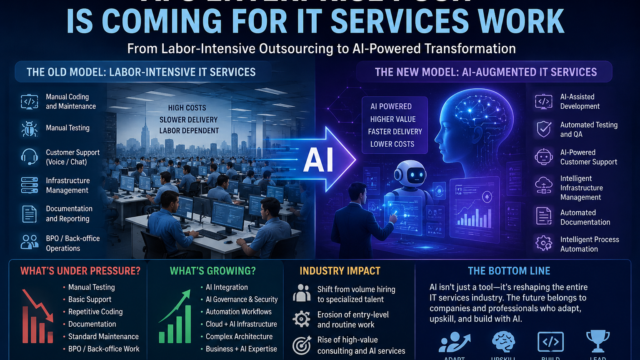
The global artificial intelligence industry is evolving at an extremely fast pace, driven largely by intense competition among major technology companies. This competition is reshaping how quickly models are released, how capable they become, and how deeply they are integrated into everyday digital tools.
1. The Shift from Slow Releases to Rapid Iteration
In earlier years of AI development, major model upgrades took significant time—often years between large releases. However, the competitive landscape has changed dramatically.
Today, companies are prioritizing rapid iteration cycles, where models are updated frequently with incremental improvements. These updates may not always be massive breakthroughs individually, but together they create continuous performance gains in reasoning, coding, speed, and multimodal understanding.
This shift allows companies to respond quickly to user feedback and stay ahead in a highly competitive market.
2. OpenAI’s Push Toward Faster, Smarter Systems
OpenAI continues to accelerate its development cycle, focusing on improving reasoning ability, long-context understanding, and agent-like behavior.
Instead of building only conversational tools, the direction is now toward AI systems that can complete tasks, use tools, and perform multi-step workflows with minimal human input. This reflects a broader transition from chat-based models to action-oriented AI agents.
3. Google’s Ecosystem-Driven AI Strategy
Google is advancing its Gemini models with a strong emphasis on integration across its ecosystem, including Search, Android, and Workspace tools.
Rather than treating AI as a standalone product, Google is embedding intelligence directly into the services billions of users already rely on. This approach aims to make AI a seamless part of productivity, communication, and information discovery.
4. Meta’s Focus on Open and Social AI
Meta is taking a different but equally aggressive approach by focusing on open-source models and AI integration within social platforms.
By embedding AI into apps like WhatsApp, Instagram, and Facebook, Meta is scaling AI usage across global social networks. Their open model strategy also encourages developers to build new applications on top of their systems, increasing innovation outside the company itself.
5. The Result: A Fast-Moving AI Race
The combined pressure from these companies has created a rapid innovation cycle across the entire industry. Key outcomes include:
- Faster model releases and updates
- Continuous performance improvements instead of slow generational leaps
- Stronger focus on AI agents that can perform real tasks
- Wider integration of AI into everyday apps and devices
Conclusion
Competition in the AI industry is no longer just about who has the most powerful model—it is about who can iterate the fastest, integrate the deepest, and deliver the most useful real-world capabilities. As companies like OpenAI, Google, and Meta continue to push each other, the pace of innovation is likely to remain extremely high, shaping a future where AI systems become more capable, more embedded, and more autonomous.